| Question | Short Answer |
|---|---|
| What light does this Crassula need? | Bright light is the default. |
| How should it be watered? | Water thoroughly, then allow the upper 3–4 cm of substrate to dry before watering again. |
| What substrate works best? | Use a free-draining mix with substantial pumice, grit, or perlite. |
| How is it propagated? | Stem cuttings are the most reliable method for most Crassula. |
"Fairy crassula" is a common name applied most often to Crassula multicava, a shade-tolerant mat-forming species from the Eastern Cape and KwaZulu-Natal of South Africa, and occasionally to smaller ground-covering relatives within the genus. The name refers to the airy, pinkish flower sprays that hover above the foliage in spring, giving the plant a "fairy mist" appearance when a clump is in full bloom.
Part of the Complete Crassula Guide.
Likely Species
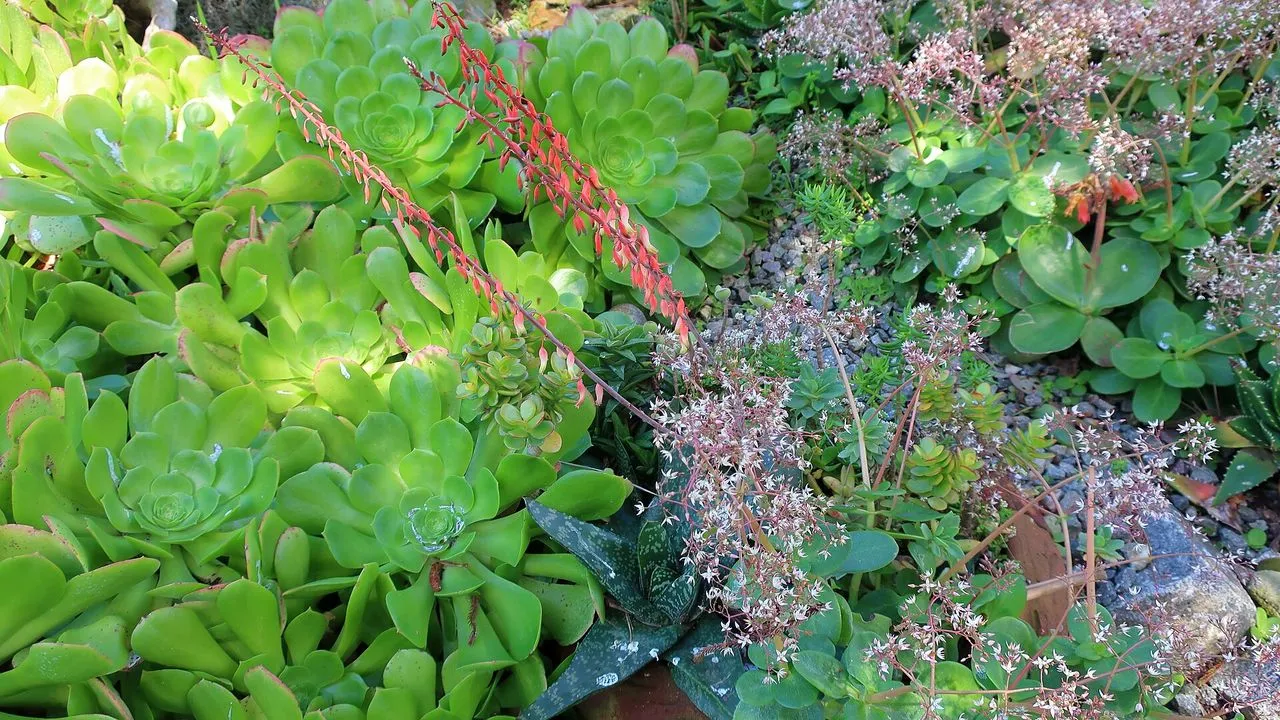
If your plant is labelled fairy crassula, it is almost certainly Crassula multicava L. The species has rounded, flattened leaves with pale spots (hydathodes, visible as translucent dots in bright light), and produces masses of small pink-white stellate flowers on tall thin stalks in early spring. The cultivar C. multicava 'Purple Dragon' is a reddish-leaved selection of the same species.
Less commonly the name is applied to Crassula spathulata, a low trailing species with small scalloped leaves. The two are easy to distinguish: multicava has flat, rounded leaves 2–4 cm across and upright flower stalks; spathulata has smaller serrated leaves and a creeping rather than clumping habit.
Identification (Crassula multicava)
- Habit: mat-forming to low-mounding, 15–30 cm tall, spreading by rooting stolons; forms dense ground cover over time.
- Leaves opposite decussate, 2–4 cm long, obovate to nearly round, thin for a Crassula, glabrous, green with scattered translucent spots.
- Leaves flush reddish-purple under direct sun or cold stress.
- Flowers: panicles of small (5–8 mm) pink-and-white stellate flowers on stalks 20–30 cm tall, emerging in late winter to spring. After flowering the panicles often produce plantlets in place of some of the faded flowers — a reliable propagation cue.
The translucent dots and the abundant spring flower display are the easy diagnostic features.
Cultivation
C. multicava is unusual in the genus for its genuine shade tolerance. It is the one common Crassula that thrives in dappled shade or bright indirect light, and it is widely used as a ground cover under trees in frost-free gardens.
- Light. Bright indirect to partial shade. Direct midday sun is tolerated but produces purple stress coloration and sometimes scorched leaves.
- Substrate. Tolerates heavier substrate than most Crassula. A standard succulent mix works; a loamier mix with 30–40% mineral content also works provided drainage is adequate.
- Water. More tolerant of regular watering than the pillar default. In a garden situation it handles normal border watering without issue; in a pot, water when the top 3 cm is dry and water thoroughly.
- Temperature. 5°C–32°C. Brief exposure to −1°C on dry tissue is survivable; sustained frost kills the leaves and sometimes the crowns. Established garden clumps usually recover from the roots.
Propagation
The flower stalks produce miniature plantlets in place of some of the spent flowers once the main bloom fades. Detach these with a few millimetres of stalk attached and press the base into damp gritty substrate; roots appear within a fortnight. This is by far the easiest propagation method in the genus.
Stem cuttings taken from the basal stolons root quickly. Leaf propagation works slowly; stem cuttings are more reliable.
Divide mature clumps in spring. The rooting stolons snap apart easily; pot each rooted section into its own container.
Notes
C. multicava is one of the few genuinely useful succulents for shady rock gardens and woodland edges in frost-free climates. It tolerates a degree of competition from tree roots, persists on dry banks, and flowers reliably. In containers indoors it is a tidy houseplant for rooms too dim for most succulents.
The generic name "fairy crassula" also occasionally attaches to miniature Crassula with small flowers, including C. lactea and C. sarcocaulis. These are not conspecific with multicava; check the flower and leaf morphology against a good reference before assuming the label is correct.
See also
- Crassula sarmentosa — another trailing shade-tolerant species.
- Fuzzy Crassula — neighbouring common-name grouping of hairy-leaved species.
- Crassula species — on narrowing down an unlabelled plant.
- Crassula socialis — another mat-forming ground-cover species for comparison.
Frequently Asked Questions
What light does this Crassula need?
Bright light is the default. Compact species and red-flushing cultivars need several hours of direct sun after gradual acclimation.
How should it be watered?
Water thoroughly, then allow the upper 3–4 cm of substrate to dry before watering again. In cool winter conditions, reduce watering sharply.
What substrate works best?
Use a free-draining mix with substantial pumice, grit, or perlite. Dense peat-heavy compost keeps the root zone wet too long.
How is it propagated?
Stem cuttings are the most reliable method for most Crassula. Leaf cuttings work on jade-type plants but are less useful for tight stacked miniatures.