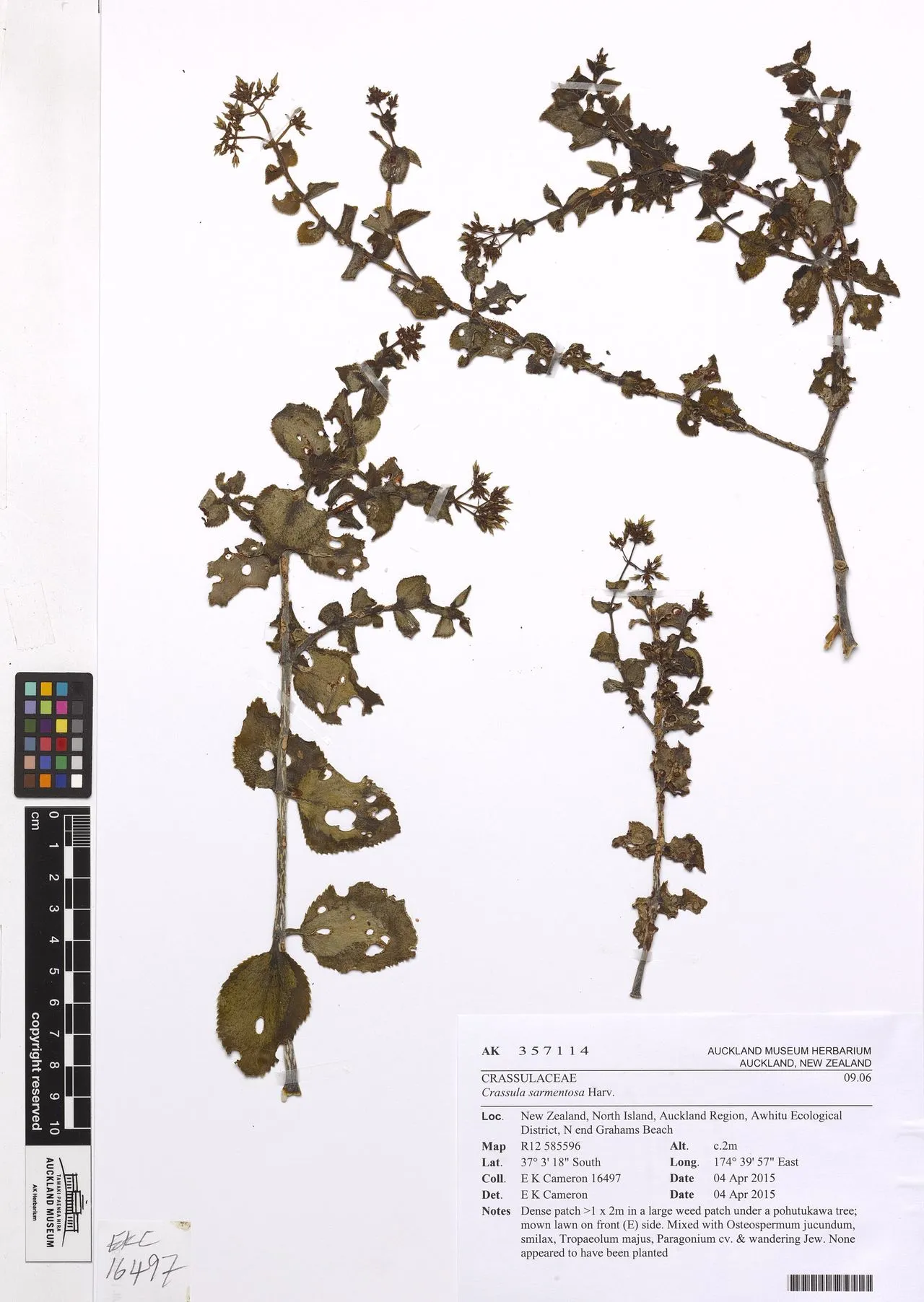
Mealybugs are the most common insect pest of Crassula ovata and the one most frequently missed in early stages, because the first colonies establish in leaf axils against the stem where casual inspection does not reach. A jade plant can carry a moderate infestation for months before the damage becomes obvious in yellowing leaves and premature drop. By then the colony has often spread to neighbouring plants and into the root zone. This guide covers identification, the underground root form, treatment at every severity level, and a prevention routine that catches infestations before they grow.
Part of the Complete Crassula Guide.
How mealybugs colonise jade plants
Pseudococcus and Planococcus species, the genera most commonly found on Crassula ovata, are soft-bodied hemipteran insects 2–4 mm long covered in a white to cream waxy secretion. They pierce leaf and stem tissue with needle-like stylet mouthparts, extract phloem sap continuously, and excrete a sticky sugary liquid called honeydew. Females produce egg sacs — dense white cottony masses — at the base of leaf axils and in the sheltered recesses of branch forks.
The colonisation pattern is predictable. The first generation establishes at the lowest, most sheltered leaf axils near the stem base, then spreads upward through progressively younger nodes. Light infestations are invisible to a casual glance at leaf surfaces. Diagnosis requires prying open each leaf axil and looking directly at the leaf-to-stem junction with a torch. Early-stage colonies show as small waxy smears before they develop the characteristic cotton; by the time fluffy masses are visible at arm's length, the colony has usually been established for several weeks.
Feeding damage progresses from minor yellowing of individual leaves to generalised chlorosis and premature leaf drop as the colony grows. Honeydew dripping onto lower leaves provides a substrate for sooty black mould (Capnodium spp.), which coats leaf surfaces within days and further reduces photosynthesis. For the full impact on leaf drop see jade plant leaves falling.
Root mealybugs
The root mealybug (Rhizoecus spp.) is a distinct problem that lives entirely below the substrate surface. Above-ground symptoms are non-specific: slow or absent growth, pale undersized new leaves, scattered premature leaf drop, and a general appearance of chronic ill-health despite apparently correct care. There are no cottony tufts visible anywhere on the plant body.
Diagnosis requires unpotting. Root mealybugs appear as white to grey-white powdery or waxy residue on the roots and in the pore spaces between substrate particles. This wax differs from the mineral component of pumice or perlite: it is more irregular and appears as a thin coating on root surfaces rather than as discrete granules. A 10× magnifying glass confirms the difference. Full diagnostic guidance is at root mealybug identification.
A plant confirmed with root mealybugs needs complete substrate replacement. Discard all old mix, rinse the root ball thoroughly in room-temperature water, and repot into fresh dry mineral mix in a clean or disinfected pot. A brief swish of the cleaned roots in 70% isopropyl alcohol for 10–15 seconds, followed by a plain-water rinse, kills any remaining insects before the plant goes back into substrate.
Introduction from new plants and nursery stock
Most mealybug infestations in home collections arrive on recently purchased plants. Warm greenhouses, dense plant spacing, shared benches, and high ambient humidity allow mealybug populations to develop unnoticed. A single plant with a hidden colony can transfer first-instar crawlers to every nearby plant within two to three weeks.
First-instar crawlers are approximately 0.3–0.5 mm long and lack the adult's visible wax coating. They walk short distances and transfer on hands, tools, and clothing as well as by direct plant-to-plant contact. Any new acquisition should be inspected under good light with a hand lens, then quarantined in physical isolation from the rest of the collection for 3–4 weeks. Check every leaf axil, every branch fork, and the soil surface. If any cottony residue is found, treat before ending quarantine.
Spread through shared tools and proximity
Any tool used on an infested plant — scissors, moisture-meter probes, wooden toothpicks — carries crawlers. Wipe all tools with 70% isopropyl alcohol before moving to the next plant. If a mealybug colony is discovered, isolate the affected plant the same day, then systematically inspect every plant that was within 30 cm of it over the preceding month. Crawlers can cross 30 cm of shelf overnight.
Crowded collections on shared staging sustain continuous re-infestation cycles even after individual treatment: a cleared plant sitting beside an untreated neighbour picks up crawlers again within weeks. Always treat the full visible population, not the individual plant where the colony was first noticed.
Winter and low-light conditions
Mealybug populations build fastest in warm, still indoor conditions with low air movement and dim light. Late autumn and winter — when jade plants are often moved indoors for frost protection, ventilation is reduced, and the plant's own growth slows — create ideal conditions for colony growth.
A plant with adequate bright light and good air circulation resists infestations better than one in a dim corner. Bright light encourages compact firm growth; firm cell walls offer meaningfully more resistance to stylet mouthparts than the soft cells of a light-starved, stretched plant. This is not immunity — mealybugs colonise healthy plants readily — but it is a real risk reduction.
How to identify mealybug damage
For the full genera-level reference see mealybug identification. The jade-specific diagnostic signs:
| Sign | Location | Stage indicated |
|---|---|---|
| White cottony tufts | Leaf axils, branch forks | Established adult colony with egg sacs |
| White waxy residue on roots | Root ball, substrate pores | Root mealybugs |
| Sticky film | Lower leaf surfaces, pot rim | Honeydew excretion |
| Black powdery coating on sticky areas | Same as honeydew | Sooty mould secondary infection |
| Premature yellow leaf drop | Throughout plant | Feeding damage |
| Tiny pale specks moving slowly | Leaf axils, leaf undersides | First-instar crawlers |
A 10× jeweller's loupe is the most useful identification tool. Mealybug cotton is readily distinguished from the white grit component of pumice substrate: mealybug wax is irregular, light, and associated with actual insect bodies or egg sacs.
Risk and severity
Above-ground mealybugs caught at one or two axils with no leaf yellowing are low risk. Treat promptly and the plant recovers fully with no lasting damage.
A colony spread across five or more branch locations, or accompanied by generalised yellowing and leaf drop, is moderate risk. Treatment must be systematic and repeated over 4 weeks because eggs hatch in waves and each new hatch brings another generation of crawlers.
Root mealybugs are moderate to high risk depending on how long the infestation has been present. A large population can have damaged fine roots over a full season; the plant may take another season to fully recover even after insects are eliminated.
Solutions
Localised above-ground infestations
Dab each visible insect and egg sac with a cotton swab soaked in 70% isopropyl alcohol. The alcohol dissolves the waxy coating on contact and kills the insect within seconds. Work systematically: open every leaf axil from the soil line to the growing tip, check all branch forks, treat the underside of any sticky or discoloured leaf. Complete the whole plant in one session. Repeat the full inspection and treatment every 7 days for 4 weeks — hatching crawlers from surviving eggs are killed by subsequent rounds.
After each session, rinse leaf surfaces with a small amount of lukewarm water to remove dead insects and honeydew. Use a dry cloth to wick excess water from axils promptly.
Widespread infestations
When more than a quarter of the plant is affected, or if colonies return after two rounds of alcohol treatment, switch to a spray approach. A neem oil emulsion — 5 mL neem oil and 2 mL mild dish soap dissolved in 1 L warm water, shaken thoroughly before use — applied to all surfaces and allowed to dry suppresses mealybugs through both contact kill and repellent action. Three applications at 7-day intervals are standard. See neem oil application for dilution ratios and notes on leaf sensitivity.
For severe or recurring infestations, a soil-drench systemic insecticide containing imidacloprid or acetamiprid translocates through the vascular system and makes sap toxic to feeding insects. Apply at the manufacturer's recommended rate to moist substrate. Systemic residual effects last 4–8 weeks. Avoid on flowering plants accessible to pollinators. For a staged integrated approach covering physical removal, oils, and systemics in sequence see IPM for succulents.
Root mealybugs
Remove all old substrate and discard it. Rinse the root ball thoroughly in room-temperature water. Inspect cleaned roots under good light. If root mealybug wax is confirmed, briefly submerge the cleaned roots in 70% isopropyl alcohol for 10–15 seconds, then rinse in plain water. Repot into fresh dry mineral mix in a clean pot — disinfect the old pot with a 1:10 bleach solution if reusing. Keep the plant in bright indirect light for two weeks, watering once lightly after 7 days to encourage new fine-root growth.
Prevention
Inspect every jade plant monthly: pry open three or four leaf axils per plant with a wooden toothpick and check with a torch. This takes under two minutes and is the only reliable early-detection method for hidden colonies. Quarantine all new plants for 3–4 weeks in isolation. Maintain air movement around plants — a small fan on low for a few hours daily significantly disfavours establishment. Avoid high-nitrogen fertiliser, which produces the soft rapid growth most attractive to sap-feeding insects. Wipe all tools with isopropyl alcohol before moving between plants.
See also
- Mealybug identification — life cycle, genera, and the crawlers that transfer infestations.
- IPM for succulents — combining physical removal, oils, and systemics in a resistance-reducing sequence.
- Jade Plant Leaves Falling — mealybug feeding as one of several causes of premature leaf drop.
- Neem oil application — dilution ratios and safety notes for spray treatment on succulents.
Frequently Asked Questions
What do mealybugs look like on a jade plant?
White to cream cottony tufts at leaf axils and branch forks, 2–4 mm long adults with a waxy coating. Honeydew makes lower leaves sticky and sooty mould may follow.
Can mealybugs kill a jade plant?
A large undetected colony over one growing season can yellow, weaken, and defoliate a jade. Caught early, the plant recovers fully with no lasting damage.
How do I know if I have root mealybugs?
The plant grows poorly and drops leaves despite appropriate care. Unpot and look for white waxy powder or residue on roots and between soil particles — distinct from the mineral grit of pumice or perlite.
Does neem oil kill mealybugs on jade plants?
Neem oil emulsion suppresses mealybugs through contact and repellence. Apply at 5 mL neem per 1 L water with 2 mL dish soap, spray thoroughly every 7 days for 3 consecutive applications.