| Question | Short Answer |
|---|---|
| Is Senecio integerrimus a succulent? | No. |
| What is the current name for Senecio integerrimus? | The post treats it as Packera integerrima, while noting the older Senecio integerrimus name. |
| Where does Packera integerrima grow? | It is native from the western United States north into British Columbia and Alberta, in habitats from sagebrush flats to subalpine meadows. |
| How do you propagate lambstongue ragwort? | By seed, cold-stratified for 4–6 weeks before spring sowing. |
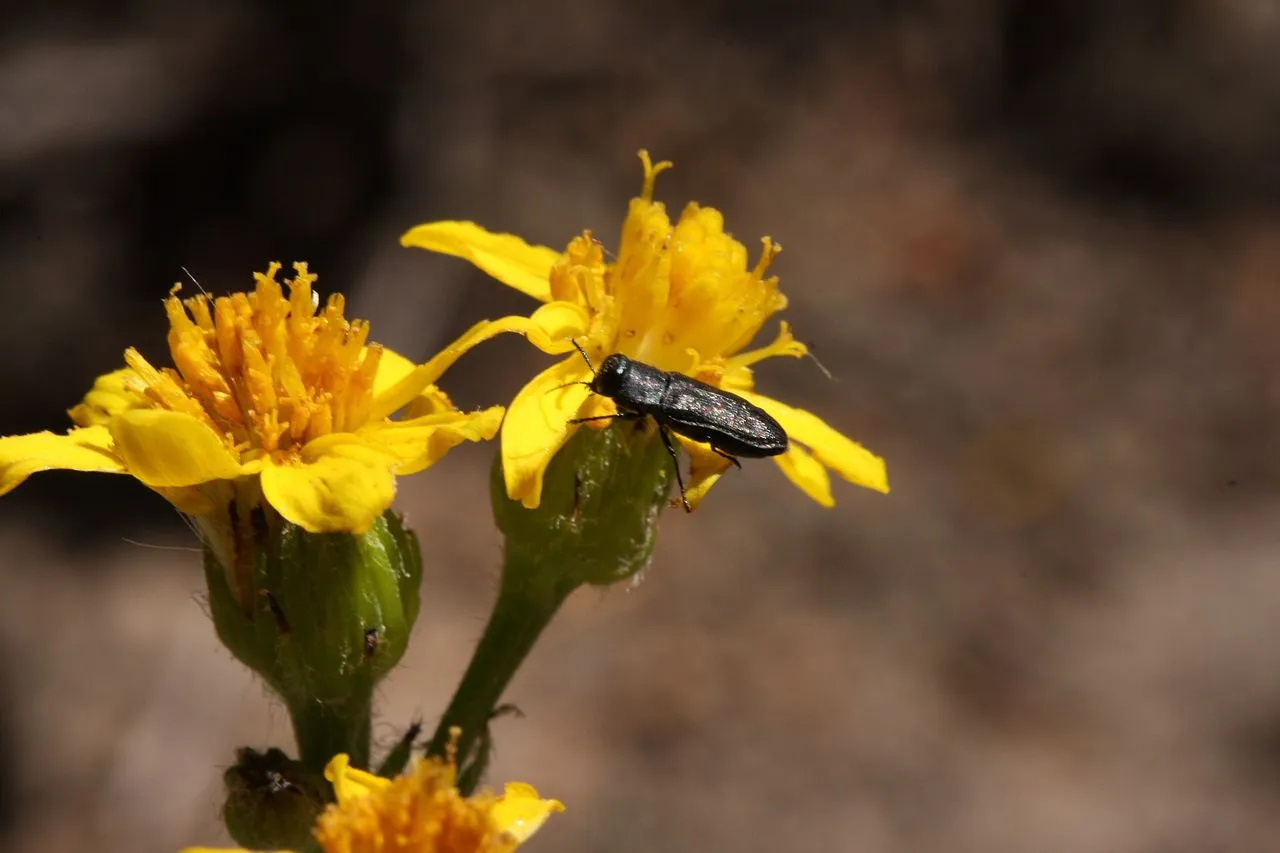
Senecio integerrimus Nutt., now usually placed in the segregate genus Packera as Packera integerrima (Nutt.) W.A.Weber & Á.Löve, is lambstongue ragwort or western groundsel. It is a North American wildflower of meadows and open woodland, not a succulent.
This page exists to disambiguate, since the slug matches a frequent search query. Part of the Complete Senecio Guide.
What the plant actually is
- Erect perennial herb, 20–70 cm tall.
- Basal leaves oblanceolate, untoothed to very shallowly toothed, 6–18 cm long, green and soft.
- Stem leaves smaller, sessile, clasping.
- Flower heads yellow, ray-bearing daisies, 2–3 cm across, in flat-topped clusters in late spring and early summer.
- Fibrous-rooted, not rhizomatous.
Native from the western United States (California, Oregon, Washington, Idaho, Montana, Wyoming, and the Great Basin) north into British Columbia and Alberta. Habitat ranges from sagebrush flats and pine forest openings to subalpine meadows.
Why this is not a succulent
The leaves and stems are soft herbaceous tissue with no meaningful water storage. P. integerrima survives dry summers through dormancy, not through succulence: it completes flowering and seed set in spring, then the above-ground growth senesces while the rootstock persists. The plant cannot be kept on a succulent-plant regime; dry mineral substrate will exhaust it within a season.
Brief care
- Full sun to light shade; ordinary well-drained garden soil.
- Moderate moisture through spring; tolerates dry summer dormancy.
- Hardy to approximately USDA zone 4.
- Propagation by seed, cold-stratified for 4–6 weeks before spring sowing.
More suited to native-plant, meadow, or rock-garden contexts than to a succulent collection. For detailed cultivation, consult a regional wildflower reference.
Notes
Like other members of the broader Senecio/Packera group, P. integerrima contains pyrrolizidine alkaloids and is toxic to livestock in chronic ingestion. Several Indigenous peoples of western North America have historical ethnobotanical uses for related species, none of which are safe by modern standards.
If you were expecting a succulent
The true succulent Senecio and Curio species are overwhelmingly southern African. See:
- Senecio rowleyanus — string of pearls.
- Senecio mandraliscae — blue chalksticks.
- Complete Senecio Guide — the succulent group overview.
See also
- Senecio aureus — golden ragwort, the eastern Packera counterpart.
- Senecio triangularis — arrowleaf ragwort, another western Packera.
- Senecio vulgaris — common groundsel.
Frequently Asked Questions
Is Senecio integerrimus a succulent?
No. It has soft herbaceous tissue and no meaningful water storage. It is a meadow and open-woodland wildflower.
What is the current name for Senecio integerrimus?
The post treats it as Packera integerrima, while noting the older Senecio integerrimus name.
Where does Packera integerrima grow?
It is native from the western United States north into British Columbia and Alberta, in habitats from sagebrush flats to subalpine meadows.
How do you propagate lambstongue ragwort?
By seed, cold-stratified for 4–6 weeks before spring sowing. It is not propagated like a succulent cutting.