| Question | Short Answer |
|---|---|
| Is Senecio macroglossus a true succulent? | It is semi-succulent, not a classic dryland succulent. |
| How is wax ivy different from Senecio angulatus? | Wax ivy has 3–5-lobed ivy-shaped glossy leaves. |
| Does Senecio macroglossus need support? | Yes. |
| How do you propagate wax ivy? | A 10 cm stem cutting with at least two leaf nodes roots in water or gritty substrate in 2–3 weeks. |
Senecio macroglossus DC. is the wax ivy or Natal ivy. Unlike most of its relatives in the trade, it is a semi-succulent climber rather than a rosette or trailing ground-cover species. It remains in Senecio sensu stricto under current taxonomy.
Native to eastern South Africa (KwaZulu-Natal, Mpumalanga) and Zimbabwe, where it climbs over shrubs and low trees in forest margins and open grasslands. Part of the Complete Senecio Guide.
Identification
- Twining climber with slender, semi-woody stems to 3 m.
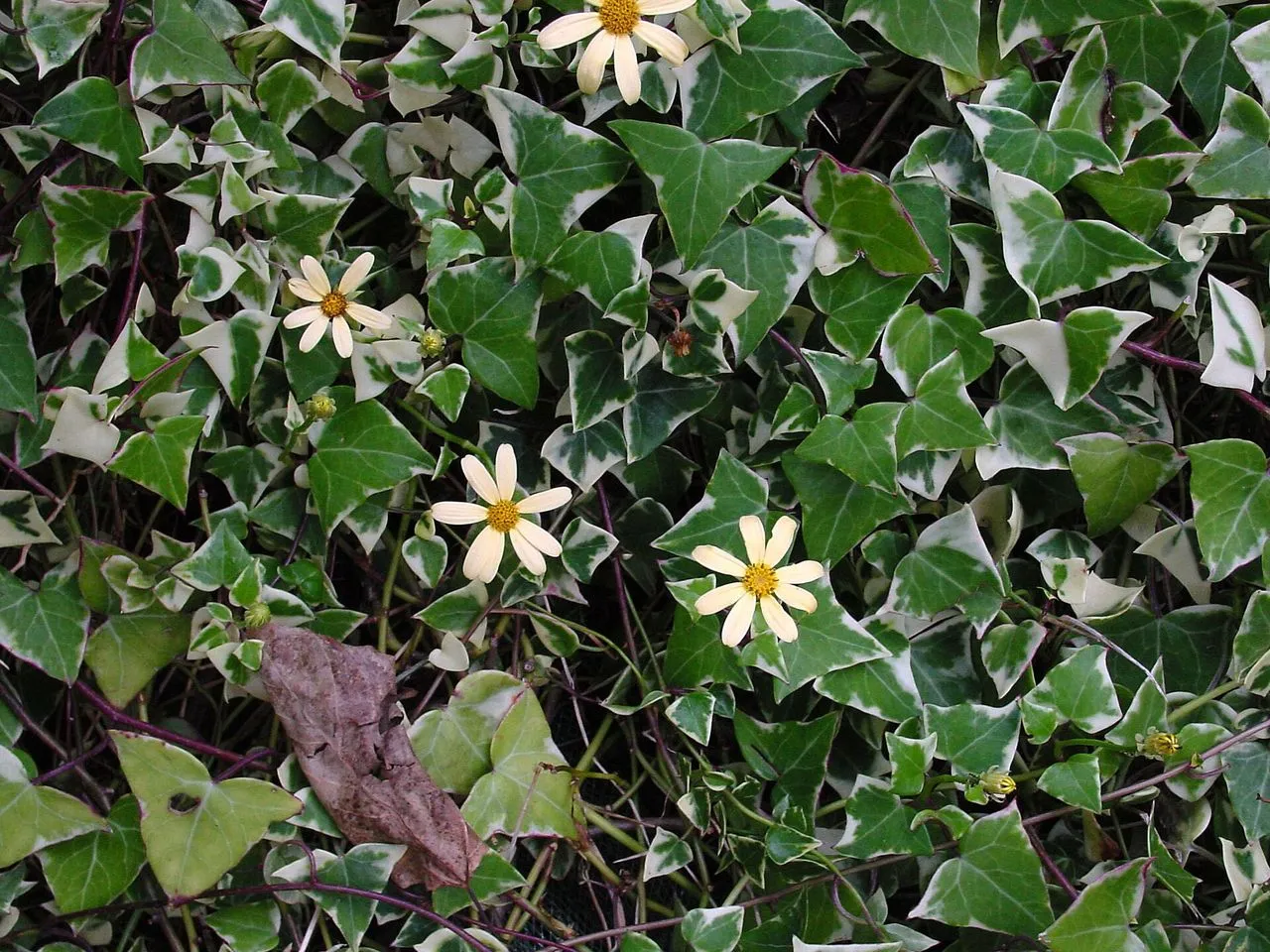
- Leaves triangular to ivy-shaped with 3–5 shallow lobes, 4–7 cm across, glossy waxy green, fleshy but not thick-succulent.
- Capitula yellow, daisy-like with ray florets (unusual in the succulent group, which mostly has rayless heads), 3–5 cm across, borne at stem tips in winter.
- Latex exuded from broken stems.
The ivy-shaped glossy leaves with clear yellow daisy flowers distinguish it from anything else in the cultivated Senecio/Curio group. A variegated cultivar 'Variegatus' with cream leaf margins is common in the trade and is sometimes the only form encountered.
Cultivation
Closer to a climbing houseplant in habit than to a classic succulent. Divergences from the pillar:
- Light. Bright indirect light preferred. Direct afternoon sun scorches the waxy leaves. An east window or bright shade outdoors is ideal.
- Water. More than any other plant in this guide. The leaves are only moderately succulent and the plant tolerates consistently moist substrate that would rot Curio rowleyanus in a week. Water when the top 2 cm of substrate dries, typically weekly.
- Substrate. A more organic-rich mix than the rest of the group. 50% loam-based compost / 25% pumice / 25% grit works well.
- Cold. Frost-sensitive; protect below 2 °C.
- Support. Provide a trellis, stake, or moss pole; the plant twines readily and will not stand on its own.
Pruning to maintain shape is routine. Cut back to a node; the plant resprouts from the cut readily.
Propagation
Stem cuttings root easily in water or in gritty substrate. A 10 cm cutting with at least two leaf nodes roots in 2–3 weeks. The variegated form propagates equally well but is somewhat slower to establish.
Layering also works: bend a trailing stem to the soil surface, pin it, and roots form at the buried nodes within a month.
Notes and quirks
Because the flowers are ray-bearing daisy heads, this species is one of the clearest illustrations of the Asteraceae flower structure in the whole Senecio group. It is useful as a demonstration plant if you are introducing someone to composite-flower identification.
Widely naturalised outside its native range in frost-free climates, and listed as invasive in parts of coastal Australia and California. In garden use it should be kept in containers or in enclosed plantings where it cannot escape.
Mildly toxic to pets and livestock; the plant carries typical pyrrolizidine alkaloid content for the genus.
See also
- Senecio mikanioides — German ivy, the more aggressive climbing relative.
- Senecio angulatus — Cape ivy, another climbing species.
- Senecio jacobsenii — trailing jade.
Frequently Asked Questions
Is Senecio macroglossus a true succulent?
It is semi-succulent, not a classic dryland succulent. The leaves are fleshy but need more regular water than bead-leaved Curio species.
How is wax ivy different from Senecio angulatus?
Wax ivy has 3–5-lobed ivy-shaped glossy leaves. S. angulatus has simpler arrow-shaped leaves with two basal lobes.
Does Senecio macroglossus need support?
Yes. It is a twining climber to about 3 m and needs a trellis, stake, or moss pole.
How do you propagate wax ivy?
A 10 cm stem cutting with at least two leaf nodes roots in water or gritty substrate in 2–3 weeks.