| Question | Short Answer |
|---|---|
| What light does this Crassula need? | Bright light is the default. |
| How should it be watered? | Water thoroughly, then allow the upper 3–4 cm of substrate to dry before watering again. |
| What substrate works best? | Use a free-draining mix with substantial pumice, grit, or perlite. |
| How is it propagated? | Stem cuttings are the most reliable method for most Crassula. |
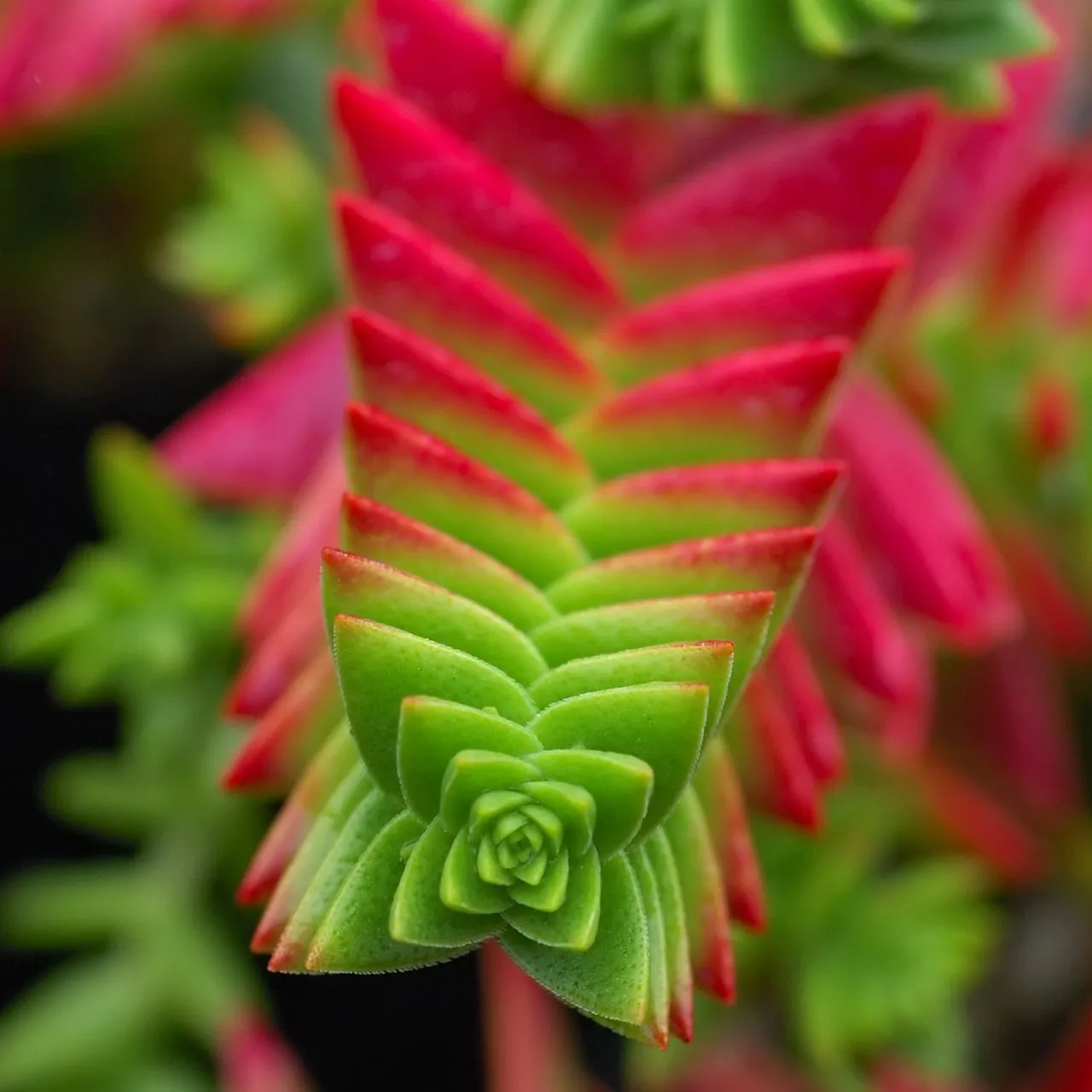
Crassula capitella 'Campfire' is a selected cultivar of the species Crassula capitella subsp. thyrsiflora, chosen for its compact habit and the intense red colour its leaves develop under strong sun and drought. The cultivar has been widely propagated since the 1990s and is among the most recognisable red-leaved succulents in the trade.
Part of the Complete Crassula Guide.
Identification
- Leaves. Lanceolate to triangular, 3–5 cm long, arranged in opposite decussate pairs along the stem. Stacked leaf pairs form a loose propeller-shaped column at the tip of each stem. Colour shifts through green, yellow-green, orange, and flame-red as light intensity and drought increase.
- Stems. Thin, sprawling to semi-upright, 15–25 cm long, rooting along the length where they touch substrate.
- Inflorescence. A tall slender panicle to 40 cm, bearing small white five-petalled flowers in terminal clusters. Produced in summer on mature stems.
- Habit. Loose mat to low mound, spreading 30–40 cm across from a single rooted piece within a couple of seasons.
Under greenhouse conditions or indoor low light, 'Campfire' looks like a plain green C. capitella. The red colour only develops when the plant is stressed.
Cultivation
Care follows the pillar defaults with one important adjustment: the cultivar needs stress to earn its name. Without strong light and occasional drought the leaves stay green, and the plant is no more visually interesting than the wild-type species.
Light: full sun for as much of the day as you can manage, outdoors from late spring through autumn. Indoors, a south-facing window with supplementary LED is the usual approach. Acclimate gradually to midsummer sun to avoid scorch.
Substrate: 60% pumice or coarse grit with loam-based compost for the balance. Not as fast as a true miniature requires, but faster than a jade plant default.
Water: moderate in the growing season, letting the substrate dry thoroughly between soakings. Deliberate mild drought is part of the colour trigger. Reduce water sharply in winter when growth stops.
Minimum 5 °C.
Propagation
Stem cuttings are the standard method. Take a 5–8 cm piece, strip the lowest leaf pair, callus 3–5 days, and insert into gritty mix. Roots appear within 2 weeks. Self-layered stems with roots already present at the nodes can be lifted and potted directly with a trowel.
Leaf propagation works but is slower than stem cuttings and offers no advantage here.
Notes and Quirks
The red pigment is anthocyanin, produced as a protective response to high light and drought stress, not a permanent pigment. A plant brought back into lower light will revert to green over several weeks as the new leaves grow in without the stress signal.
Flowering stems sometimes decline after heavy bloom. Cut spent inflorescences at the base; side shoots take over without loss of vigour.
See also
- Crassula capitella
- Crassula 'Morgan's Beauty'
- Crassula perforata
- Jade Plant Turning Red — the anthocyanin stress response that 'Campfire' takes to its most intense expression.
Frequently Asked Questions
What light does this Crassula need?
Bright light is the default. Compact species and red-flushing cultivars need several hours of direct sun after gradual acclimation.
How should it be watered?
Water thoroughly, then allow the upper 3–4 cm of substrate to dry before watering again. In cool winter conditions, reduce watering sharply.
What substrate works best?
Use a free-draining mix with substantial pumice, grit, or perlite. Dense peat-heavy compost keeps the root zone wet too long.
How is it propagated?
Stem cuttings are the most reliable method for most Crassula. Leaf cuttings work on jade-type plants but are less useful for tight stacked miniatures.