| Question | Short Answer |
|---|---|
| What light does this Crassula need? | Bright light is the default. |
| How should it be watered? | Water thoroughly, then allow the upper 3–4 cm of substrate to dry before watering again. |
| What substrate works best? | Use a free-draining mix with substantial pumice, grit, or perlite. |
| How is it propagated? | Stem cuttings are the most reliable method for most Crassula. |
Crassula imperialis is a small southern-African leaf-succulent rarely seen outside specialist collections. The name is listed in Kew's World Checklist of Vascular Plants, but the species is less widely grown than common hobby Crassulas, and most of the plants sold under this label reach collectors through succulent society seed exchanges rather than the mainstream trade.
Part of the Complete Crassula Guide.
Identification
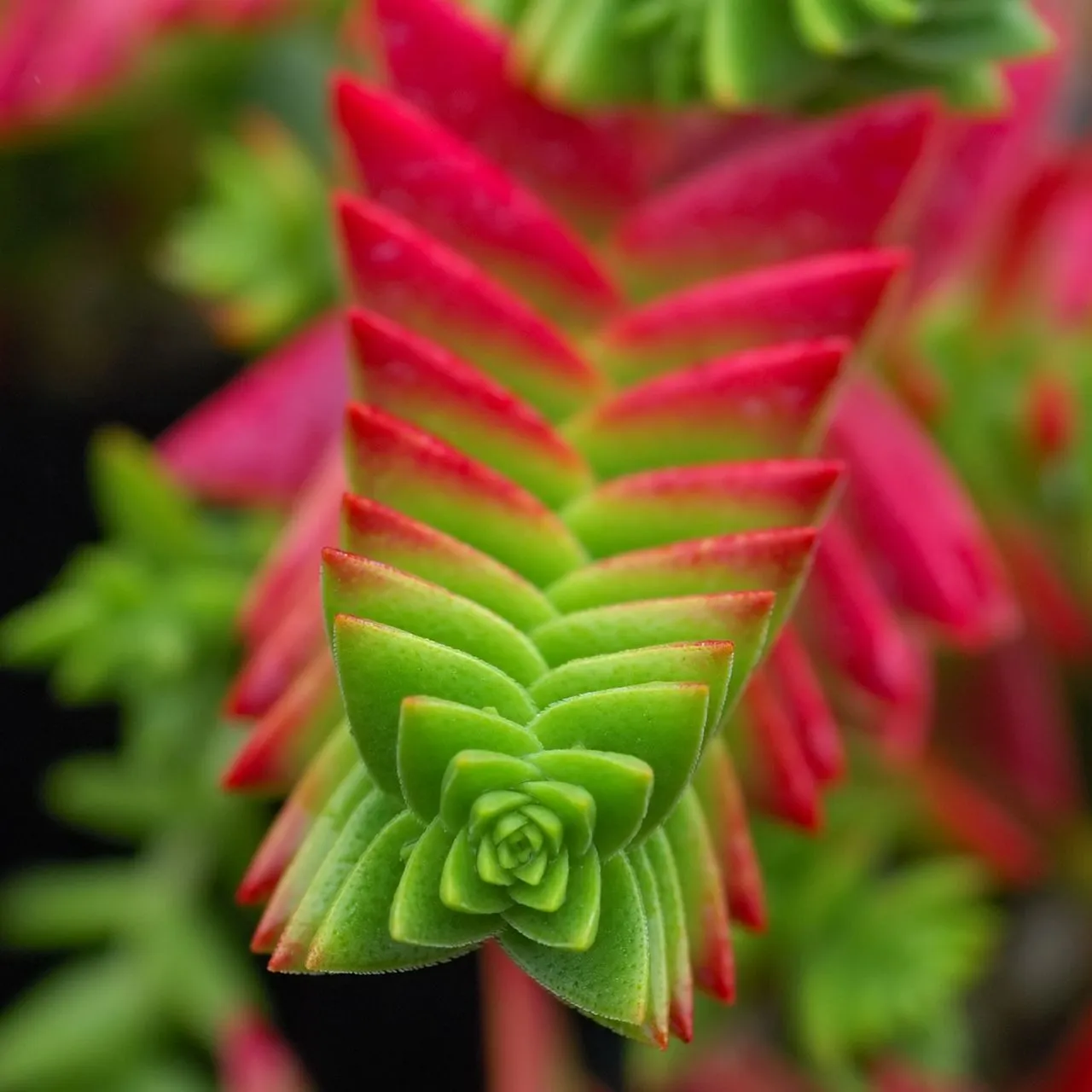
The species is compact, low-growing, and forms small clumps of stacked leaf pairs on short stems. Diagnostic features:
- Stems 3–8 cm tall, branching from the base.
- Leaves opposite decussate, 5–10 mm long, ovate, somewhat thickened, with a slightly keeled underside.
- Leaf surface green with reddish-brown tips and margins in strong light; a very light puberulence is present on young leaves in some forms.
- Small white to cream stellate flowers in short terminal cymes.
Because the plant looks similar to other small stacked Crassula — notably C. pangolin, C. rupestris forms, and some small clones sold as C. conjuncta — misidentification is common. In the absence of provenance, assume a plant labelled C. imperialis may be one of these adjacent species and treat it accordingly; cultivation requirements for the group overlap closely.
Cultivation
Standard miniature Crassula care. Where it diverges from the pillar default:
- Substrate. 70% mineral, 30% loam-based compost. These small stems rot at the base in anything wetter.
- Pot. Small shallow pan, 7–10 cm. Oversized pots hold water past the root system's ability to use it.
- Light. Very bright. Full sun outdoors in summer with gradual acclimation; supplemental LED lighting indoors in dull winters.
- Water. Soak thoroughly when the substrate is bone dry all the way through, then let it dry out again. 10–14 day cycle in summer; much longer in cool winter conditions.
- Temperature. Tolerates 5°C–30°C. Not frost hardy.
Propagation
Stem cuttings are the practical method. Snap a short piece off the parent plant, callus for five days in dry shade, and insert into gritty mix. Roots appear within 3 weeks at 20°C–25°C, though establishment is slow and visible new growth may take several months.
Leaf propagation is difficult because the leaves are small and tightly seated on the stem; clean detachment with an intact base is rare. Use stem cuttings.
Division of mature clumps works in spring when there is enough tissue to separate without damaging the parent.
Notes on the Name
"Crassula imperialis" has a shaky place in the trade literature. The name is valid per Kew, but field records are scarce and several horticulturists have questioned whether the plants circulating in Europe under this name are genuinely conspecific with the type collection. If you are buying a C. imperialis from a succulent society seed list or specialist nursery, the identification is usually firm; if it is from a mass-market succulent wall or an online marketplace, the label is more likely aspirational than accurate.
For practical purposes this matters little. The plant sold under the name responds to the same care as its close miniature relatives. If you want reliable taxonomic identity, buy from a collector with documented provenance; if you just want a small stacked-leaf Crassula, the label is decorative.
See also
- Crassula pangolin — close look-alike in cultivation.
- Crassula socialis — small cushion-forming sibling.
- Crassula species — on identifying unlabelled or mislabelled plants.
- Crassula conjuncta — another small stacked species with a complex trade and taxonomic history.
Frequently Asked Questions
What light does this Crassula need?
Bright light is the default. Compact species and red-flushing cultivars need several hours of direct sun after gradual acclimation.
How should it be watered?
Water thoroughly, then allow the upper 3–4 cm of substrate to dry before watering again. In cool winter conditions, reduce watering sharply.
What substrate works best?
Use a free-draining mix with substantial pumice, grit, or perlite. Dense peat-heavy compost keeps the root zone wet too long.
How is it propagated?
Stem cuttings are the most reliable method for most Crassula. Leaf cuttings work on jade-type plants but are less useful for tight stacked miniatures.