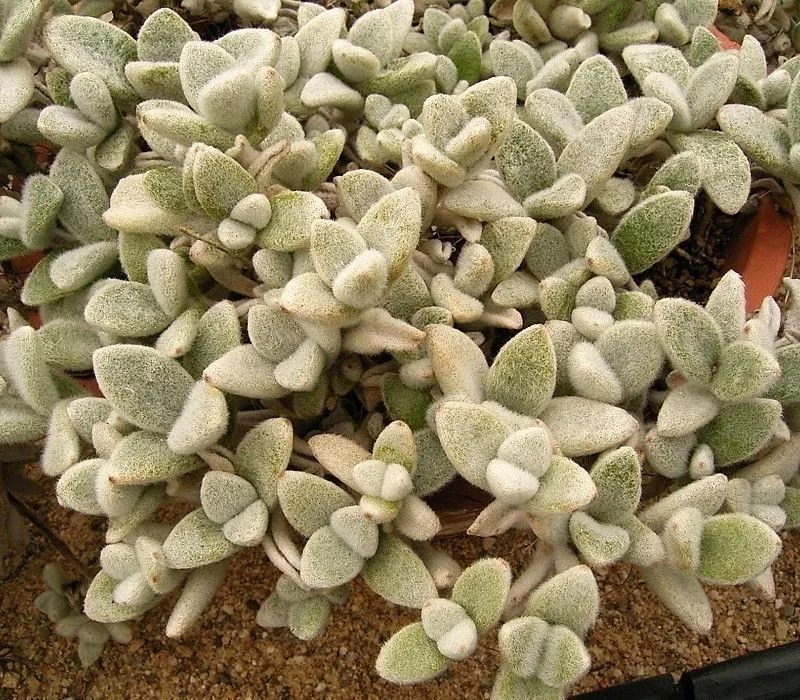
Drooping in Kalanchoe is one of those symptoms where the obvious response — reaching for the watering can — is exactly right in one scenario and exactly wrong in another. The genus is forgiving enough that most single-cause drooping episodes are recoverable, but acting on the wrong diagnosis converts a manageable situation into a serious one. Two plants drooping in identical pots on the same windowsill may require diametrically opposite interventions.
Part of the Complete Kalanchoe Guide.
Overwatering: mechanism and identification
Overwatering is not about the volume of water applied in a single session but about how long the substrate remains saturated between waterings. Kalanchoe root systems require oxygen. Roots of terrestrial plants are not adapted to extract oxygen from water — they rely on air-filled pore spaces in the substrate. When those pore spaces remain continuously flooded, roots respire anaerobically, producing ethanol and lactate as metabolic by-products. These compounds damage root cell membranes. Damaged root cells cannot maintain the electrochemical gradients needed for water transport into the plant.
The paradox that confuses many growers: an overwatered Kalanchoe droops because it is not getting water to its leaves, even though the substrate is saturated. The leaves look dehydrated — drooping, losing turgor — because the root system is no longer functioning normally. Adding more water to a drooping plant in wet soil does not fix this; it accelerates root damage and moves the situation toward full root rot. The combined diagnostic and rescue protocol for root rot is in kalanchoe root rot.
Signs that drooping is caused by overwatering:
- Substrate is heavy and wet when the pot is lifted.
- Lower leaves are yellow, translucent, or soft and glassy rather than shrivelled.
- Leaves droop but do not feel dehydrated when pinched — they feel slightly swollen, soft, or beginning to go mushy.
- A faint sour or fermented smell from the substrate or pot drainage holes.
- The plant was watered within the past 7 days, especially in cool, low-light winter conditions when the substrate dries slowly.
- The pot is plastic or glazed ceramic without adequate drainage, or sits in a filled saucer.
Underwatering: mechanism and identification
Underwatering causes a completely different physiological event. Kalanchoe are succulents — they store water in their thick leaves precisely to buffer against drought. When the root zone is completely dry for an extended period, the plant first depletes its leaf water reserves to maintain metabolic function. As leaf cells lose turgor pressure, the leaves soften and droop. At this stage, the leaves are flexible, slightly wrinkled or shrivelled — especially along the edges or lengthwise — and feel neither crisp nor glassy. They feel like slightly deflated rubber.
The texture is the key differentiator: drought-stressed leaves are dehydrated — flexible, leathery, slightly collapsed. Overwatered leaves are soft in a different, wet way — glassy, beginning to lose structural integrity, or already translucent.
Signs that drooping is caused by underwatering:
- Substrate is bone dry when pressed; pot is very light when lifted.
- Leaves feel flexible and slightly shrivelled or wrinkled, especially on the underside and at the edges.
- Leaves maintain their colour — they are not yellow or translucent. They may be slightly paler than normal but are not glassy.
- The droop is distributed across the plant; lower leaves may show it most clearly, but mid-plant leaves also droop as reserves are used.
- The plant has not been watered in 3 or more weeks during a warm growing period, or has been in very dry indoor air during winter heating season.
For detail on distinguishing drought from other causes of colour change and leaf deterioration, see kalanchoe leaves yellow and kalanchoe leaves curling.
The pot-weight test
The single most reliable first diagnostic step is lifting the pot. A correctly moist, well-drained substrate and a root ball together have a predictable weight that each grower learns for their specific pot-plant combination. After a thorough watering, a 12 cm terracotta pot with a K. blossfeldiana might weigh 600–800 g. Once completely dry, the same pot and plant weigh 300–400 g. The absolute numbers vary with pot material and substrate, but the relative difference between "full" and "dry" weight is large enough to be informative.
- Pot feels heavy for its size: Substrate is wet. Do not water. Investigate overwatering as the cause.
- Pot feels very light — noticeably lighter than you expect: Substrate is dry. Underwatering is likely.
- Pot weight feels normal, leaves still drooping: Consider secondary causes — heat stress, root damage, or root mealybugs.
This test takes five seconds and provides more reliable information than visual inspection of the leaves alone. It is worth building it into every plant handling session.
Heat stress and high-temperature drooping
At sustained temperatures above 30–32 °C, especially in direct summer sun through glass, Kalanchoe can droop from heat stress. Transpiration — water loss through the stomata — accelerates faster than the roots can replace moisture, and leaves lose turgor even when the substrate is normally moist. This is not a watering problem; the roots are functioning but overwhelmed by transpiration rate.
Signs of heat-stress drooping:
- Occurs during the hottest part of the day (11:00–16:00) and may recover somewhat in the evening.
- Plant is in direct midday summer sun, possibly through south or west-facing glass that magnifies heat.
- Substrate is not dry; pot weight is normal.
- Temperature at the plant's position exceeds 32 °C.
- Leaves droop but are not shrivelled, wrinkled, or translucent.
Move the plant out of direct midday sun. Provide ventilation — open a window or run a fan near the plant. If temperatures at that position regularly exceed 32 °C in summer, relocate the plant for the hottest months.
Root damage from other causes
Drooping that does not clearly fit overwatering or underwatering may indicate root damage from causes other than waterlogging: root mealybug infestation, physical root damage from aggressive repotting, or a combination of substrate exhaustion and pot binding that has compromised root function without classic waterlogging. If a plant continues to droop despite what appears to be correct watering — substrate is cycling wet-to-dry appropriately, pot weight is normal — unpot and inspect the root system directly. White waxy residue on roots or in the substrate indicates root mealybugs rather than rot.
Identification at a glance
| Sign | Overwatering | Underwatering | Heat stress |
|---|---|---|---|
| Leaf texture | Soft, glassy, translucent, or mushy | Shrivelled, flexible, wrinkled | Soft to normal, not glassy |
| Leaf colour | Yellow, pale, or translucent | Normal colour, possibly slightly paler | Normal colour |
| Pot weight | Heavy, wet | Very light, bone dry | Normal |
| Smell from soil | Possibly sour or fermented | None | None |
| Time of day worst | All day | All day | Worst 11:00–16:00 |
| Substrate feel | Wet throughout | Dust-dry throughout | Normal moisture |
| Recent history | Watered recently, cool or low-light conditions | Long dry interval, or very dry air | Hot sunny weather, direct summer sun |
Risk and severity
Overwatering drooping is moderate to high risk. If the substrate has remained saturated for 10 or more days, root damage is already occurring. The window to reverse the situation without a full root rot intervention closes within 2–3 weeks of continuous saturation. A plant with a sour-smelling pot and soft lower leaves that has been wet for 2 weeks needs to be unpotted and inspected, not simply allowed to dry.
Underwatering drooping is low risk in the short term for established Kalanchoe. The succulent leaves provide significant drought buffer and the plant recovers fully from a single thorough watering in most cases. Chronic underwatering over months does reduce root mass and creates a permanently weakened plant that is more susceptible to pest colonisation.
Heat stress drooping is temporary and low risk if the cause is addressed. A plant that droops at midday but recovers in the evening is managing normally. A plant that droops all day in heat is suffering and may drop buds if it is in the flowering stage.
Solutions
For overwatering
- Stop watering immediately and do not water again until the pot is noticeably light.
- Move the plant to a warm, bright position with good airflow (18–26 °C). The combination of warmth, light, and air movement accelerates substrate drying without stressing the plant further.
- Do not attempt to fast-dry a waterlogged pot by placing it on a radiator or in direct intense sun — abrupt temperature change stresses compromised roots.
- Allow the substrate to dry completely throughout. Check by lifting (pot feels very light) and by pressing a finger 3–4 cm into the substrate.
- If drooping continues and the stem base begins to feel soft after the substrate has dried, the situation has advanced to stem rot. Unpot and follow the root rot protocol in kalanchoe root rot.
- Resume a watering schedule only after the plant has shown a positive response — firm leaves, new growth — in the dry period.
For underwatering
- Water thoroughly — fill the pot slowly until water flows freely from the drainage holes. Do not water in multiple small amounts; a single thorough soak rehydrates the substrate fully.
- Allow to drain for 20–30 minutes, then discard any runoff from the saucer.
- Do not water again until the top 2–3 cm of substrate is dry. For most indoor Kalanchoe in standard conditions, this is 7–10 days in summer and 14–21 days in winter.
- Leaves should recover within 12–24 hours of watering. If they do not recover within 48 hours, or if leaves have begun to drop from the base of the plant, inspect the root zone — the drought may have been prolonged enough to cause root die-back.
For heat stress
- Move out of direct midday sun — an east-facing position receives morning sun only, which is cooler and less intense.
- Improve ventilation around the plant. Open a nearby window or place a small fan in the room.
- Water if the substrate is also dry, but do not overwater to compensate for the heat stress.
- If the plant is in a flowering or bud-development stage, heat above 28 °C can abort bud development; address the temperature problem as a priority.
Prevention
The reliable prevention for both overwatering and underwatering is calibrating the watering interval to the actual drying rate of the substrate, which varies with season, temperature, light level, pot material, and pot size. In summer, most indoor Kalanchoe in terracotta pots with a mineral substrate need watering every 7–10 days. In winter, the same plant may need watering only every 14–28 days. Watering on a fixed schedule ignores all of these variables.
The practice that eliminates most overwatering incidents: lift the pot before every watering. If it feels heavy, put it back and check again in 3 days. If it feels light, water thoroughly. The beginner's guide to succulents covers the wet-dry cycle and how to build this habit across all succulent genera.
For heat, the prevention is positioning: Kalanchoe should not be placed in a position where afternoon summer sun through glass concentrates heat above 32 °C. East-facing positions, or south-facing positions with a thin curtain or light shade during midday hours, avoid this problem.
See also
- Kalanchoe root rot — the advanced stage of overwatering-related drooping, when root damage has progressed and requires unpotting and surgical root inspection.
- Kalanchoe leaves yellow — the colour change that frequently accompanies drooping in both overwatering and underwatering scenarios.
- Kalanchoe leaves curling — a related symptom that helps distinguish drought stress from other moisture-imbalance presentations and from environmental causes.
Frequently Asked Questions
Why are my kalanchoe leaves drooping but the soil is wet?
This is a strong sign of overwatering and early root rot. When roots have been deprived of oxygen by saturated substrate, they lose their ability to transport water upward into the plant. The leaves droop because the plant is effectively drought-stressed from the top down, despite the soil being wet. Adding more water accelerates the root damage.
How long does it take for a drooping kalanchoe to recover after watering?
An underwatered kalanchoe watered thoroughly typically shows visible improvement within 4–12 hours and full recovery within 24–48 hours. An overwatered plant that has been allowed to dry out completely may take 5–14 days before new root activity resumes and leaves recover turgor.
Can drooping kalanchoe leaves recover their shape?
Leaves drooping from underwatering recover fully to their original posture once rehydrated. Leaves that have become translucent or mushy from overwatering are dead — they will not recover and should be removed once they dry. The plant itself may recover and produce new healthy leaves even if some drooping leaves are lost.
Could heat be causing my kalanchoe to droop?
Yes. At temperatures above 32°C, particularly in direct summer sun through glass, kalanchoe can droop from heat stress and accelerated transpiration even when the substrate is moist. The leaves look wilted but not shrivelled or translucent. Move out of direct summer midday sun and ensure good ventilation.