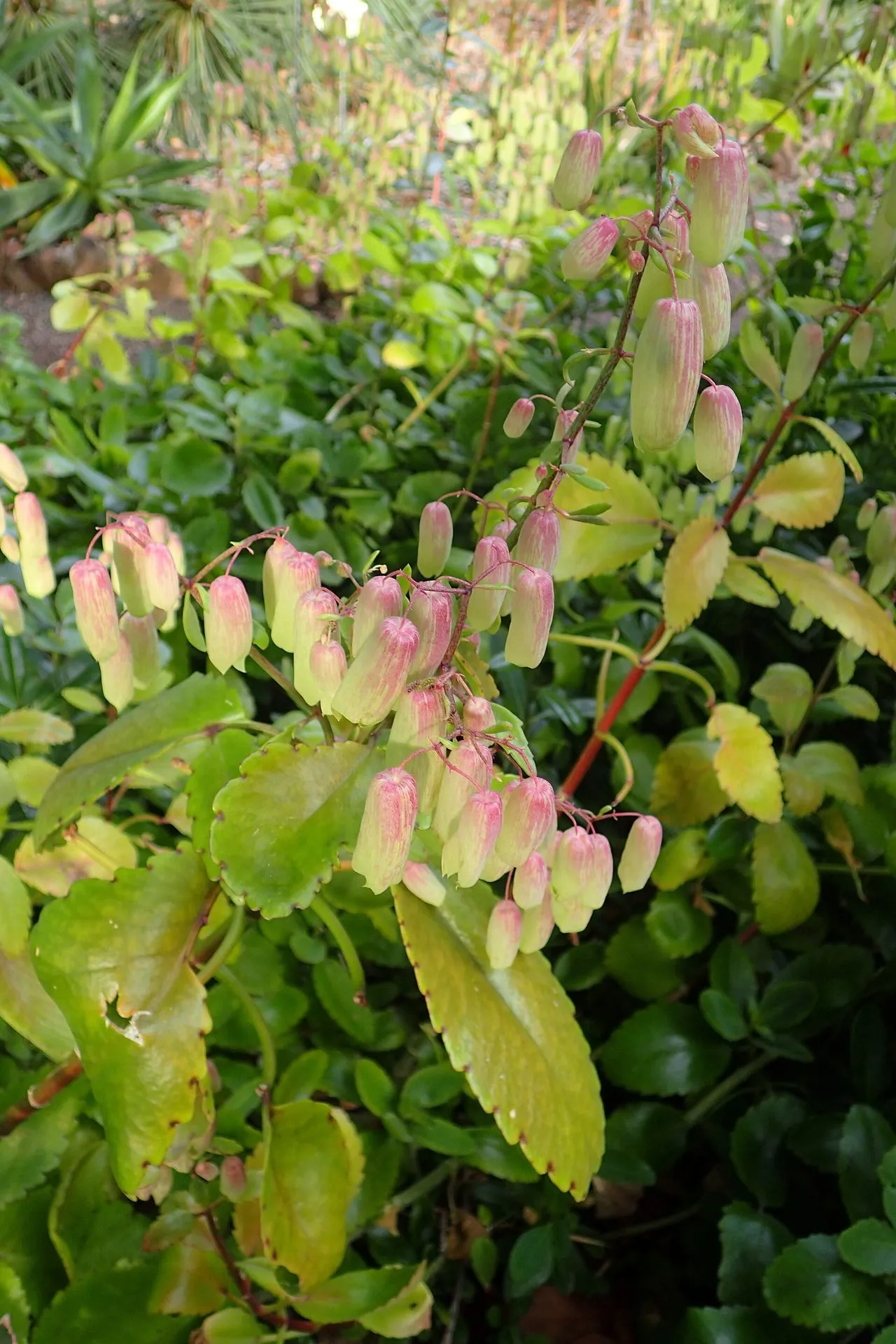
Kalanchoe blossfeldiana — the compact, cheerfully coloured flowering kalanchoe sold everywhere from supermarkets to garden centres — is one of the most searched houseplants for "why won't it flower again." The answer is almost always the same: the plant needs a specific period of uninterrupted darkness to initiate flower buds, and most indoor environments disrupt that signal nightly without the owner realising it.
Understanding the mechanism takes the mystery out of it. Once you know how and why kalanchoe flowers, triggering repeat blooms becomes a straightforward six-week process. Part of the Complete Kalanchoe Guide.
Short-day photoperiodism — the primary cause
Kalanchoe blossfeldiana is a short-day plant (more accurately, a long-night plant). It initiates flower buds not in response to light but in response to uninterrupted dark periods of sufficient length. When nights are 14 or more hours long — as they are in autumn and early winter — the plant detects the change via phytochrome receptors in its leaves and begins bud formation. Commercial growers exploit this by placing plants under blackout cloth for precisely timed dark periods, which is why you can buy a flowering kalanchoe in any month of the year.
In a home environment, the same plant placed on a living room windowsill receives the autumn short-day signal outdoors — but the sitting room lights switch on at 7 pm, the hallway light stays on past midnight, and a streetlamp shines through the curtains. Every interruption of the dark period — even a few minutes of light in the middle of the 14-hour window — resets the plant's night-length detector and prevents bud initiation. The plant remains vegetative indefinitely and grows well, producing dark green leaves but no flowers, because the long-night signal is never completed.
This is why a healthy, well-fed, well-lit kalanchoe can completely fail to bloom for years. It is not sick. It is not starved. It simply never gets the uninterrupted dark message it needs.
How to provide the dark treatment
The dark treatment is simple in principle but requires consistency. For 4–6 consecutive weeks:
- At 6:00–7:00 pm each evening, move the plant to a completely dark space — a wardrobe, a cupboard, a dark bedroom with curtains closed, or a cardboard box placed over the plant.
- Return it to its bright daytime position at 8:00–9:00 am each morning.
- During the dark period: do not open the cupboard for any reason. No checking. No watering. No "just a quick look." Even 30 seconds of light can disrupt the signal if it happens near the middle of the dark window.
After 4–6 weeks of this treatment, return the plant to its normal bright daytime position and care for it normally. Flower buds should be visible within 2–4 weeks. Once buds are showing, the dark treatment can be stopped — the flowering process is initiated and light no longer prevents it from completing.
The most practical method for growers who cannot commit to moving the plant nightly is to dedicate a spare room to the plant where no lights are used after 6 pm, or to use a timer-controlled blackout tent.
Insufficient nitrogen-to-phosphorus ratio
Nitrogen drives vegetative growth — large leaves, long stems, dark green colouration. Phosphorus supports root development and flower initiation. A kalanchoe kept on a balanced or high-nitrogen liquid feed while trying to initiate buds may continue producing lush foliage at the expense of flowers, even with the correct dark treatment. This is a secondary issue compared to photoperiod, but it matters.
During the dark treatment, stop feeding entirely. Once buds are visible and the dark treatment has ended, switch to a low-nitrogen, higher-phosphorus feed (such as a dilute tomato fertiliser at half strength) during the active bud and flower development period. Return to a balanced feed during the vegetative recovery phase between flowering cycles.
Insufficient light during the vegetative phase
A kalanchoe that has never received adequate light in its vegetative phase may lack the stored energy reserves needed to flower even when given the correct dark treatment. A plant in very low light — below 1,500–2,000 lux — that has been producing thin, widely spaced leaves is photosynthate-depleted. It can be given the dark treatment, but bud set may be weak and the flowers, if they appear, may be sparse.
Before starting the dark treatment, ensure the plant has received 6–8 weeks of bright indirect light — a south or east-facing window, or a grow light at 150–250 µmol/m²/s PAR — and that it looks healthy, with compact, dark green growth. A vigorous plant flowers far more readily than a depleted one.
Temperature and bud development
Cool temperatures (12–16 °C) can slow or stall bud development after the dark treatment has been completed. Very warm conditions above 28 °C can also disrupt bud initiation. The ideal temperature range during and immediately after the dark treatment is 15–22 °C. Most standard indoor environments fall within this range, but a plant placed in a very warm spot near a radiator during the dark treatment may have reduced bud-set success.
Cold temperatures below 10 °C during the dark period do not prevent bud initiation but may slow the process, extending the time before buds become visible after treatment ends.
Age, exhaustion, and monocarpic cultivars
Most K. blossfeldiana cultivars are reliably re-flowerable given the dark treatment. A very old plant — one that has been growing in the same depleted substrate for several years — may flower less prolifically than a young, freshly potted plant. Repotting into fresh substrate before the dark treatment improves the probability of a full bud set.
Some heavily hybridised dwarf or multiflora cultivars become progressively less vigorous after several flowering cycles. If a plant has been correctly treated and managed for two or three years and begins producing fewer buds per cycle, it has likely run its productive course. It can be propagated by stem cuttings to start fresh plants for the next generation.
How to diagnose the failure
| Observation | Most likely cause |
|---|---|
| Plant grows well, no buds, artificial lights on at night | Interrupted dark period |
| Plant grew well outdoors in summer, no buds indoors in autumn | Artificial light interrupting autumn long-night signal |
| Previous dark treatment attempted but buds did not set | Dark period interrupted, or plant too depleted |
| Buds appeared then dropped before opening | Too warm, too dry, or sudden environmental change during bud development |
| Buds appeared but flowers were sparse | Nitrogen-heavy feeding, or plant depleted before treatment |
Risk and severity
Failure to bloom is not a health problem. A non-blooming kalanchoe is healthy, growing normally, and can be managed and refowered. There is no urgency except the gardener's preference for flowers. A plant that has never been given the dark treatment will simply continue growing vegetatively indefinitely.
Prevention
Once a flowering cycle has finished and the old flower stalks have been removed, place the plant in the brightest available indirect light for 6–8 weeks to build up energy reserves. Then begin the dark treatment in autumn (September–October in the Northern Hemisphere) to align with the natural seasonal cue, or start it any time a bloom is desired. Keep a simple calendar note of when the dark treatment starts and ends — the 4–6-week commitment is easily forgotten without a reminder.
See also
- Kalanchoe blossfeldiana — the species most commonly sold as a flowering houseplant and most commonly searched for reblooming advice.
- Kalanchoe thyrsiflora — a species grown for foliage rather than flowers; not subject to the same dark-period requirement.
- Kalanchoe luciae — a paddle-leaved species grown entirely for foliage; no dark-period management needed.
- Beginner's guide to succulents — light, watering, and feeding fundamentals that keep kalanchoe in the healthy vegetative state needed before the dark treatment.
Frequently Asked Questions
How do I get my Kalanchoe to bloom again?
Give it 14–16 hours of complete darkness per night for 4–6 weeks, then move it to bright indirect light. Buds should appear within 2–4 weeks of ending the dark treatment. Reduce watering during the dark period and do not fertilise.
Why does my Kalanchoe grow well but never flowers?
Almost certainly a photoperiod problem. Any light at night — a hallway lamp, a streetlight through a window, a phone charger LED — can interrupt the dark signal the plant needs to initiate buds. Even a brief exposure (1–2 minutes) during the 14-hour dark window can reset the flowering clock.
When should I do the dark treatment on my Kalanchoe?
In the Northern Hemisphere, starting in September or October mimics the natural shortening days that trigger flowering in winter. But the treatment can be done any time of year artificially — just ensure the dark period is uninterrupted.
Does Kalanchoe flower more than once?
Yes, with the dark treatment. Most plants can be reflowered two or more times per year if given an adequate vegetative recovery period between treatments — typically 6–8 weeks of bright light and normal care after the previous flowers have faded.