| Question | Short Answer |
|---|---|
| What light does this Crassula need? | Bright light is the default. |
| How should it be watered? | Water thoroughly, then allow the upper 3–4 cm of substrate to dry before watering again. |
| What substrate works best? | Use a free-draining mix with substantial pumice, grit, or perlite. |
| How is it propagated? | Stem cuttings are the most reliable method for most Crassula. |
Crassula cephalophora is a small rosette-forming southern-African leaf-succulent, native chiefly to the Eastern Cape. The specific epithet means "head-bearing," referring to the tight terminal leaf cluster that looks like a small green head on its short stem.
Part of the Complete Crassula Guide.
Identification
- Habit: small, short-stemmed with a dense terminal rosette, 3–8 cm across at maturity, occasionally producing a few offsets from the base.
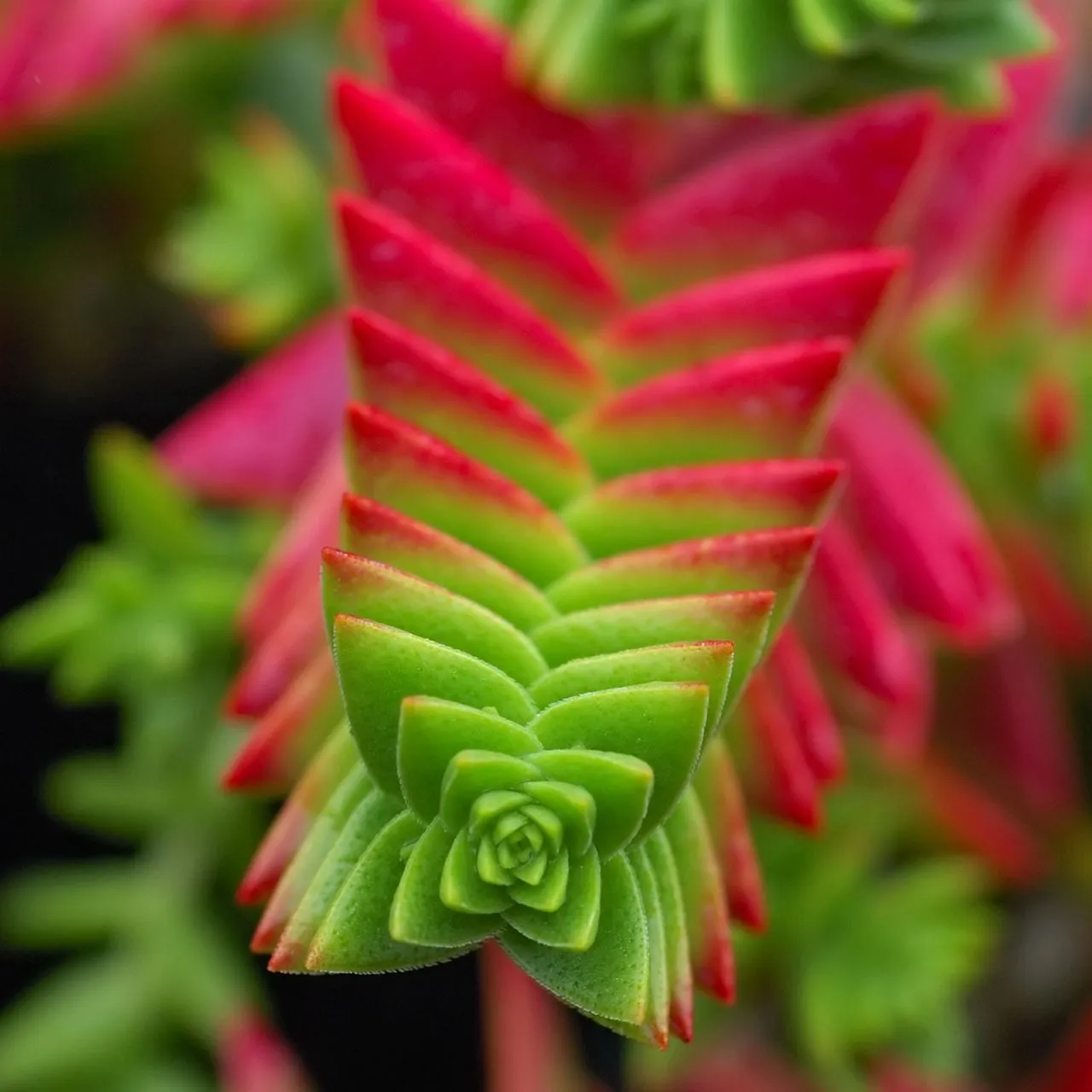
- Leaves opposite decussate, 8–15 mm long, ovate to obovate, thick and fleshy, covered in short appressed hairs that give a slightly velvety surface.
- Leaf colour green to grey-green, with pink to red tips and margins in bright light.
- Small white to cream stellate flowers in a compact terminal cyme, summer to autumn.
The species is sometimes confused with C. tecta (marked with whitish surface scales) and with juvenile C. tomentosa. The finely appressed hairs and tight head-like rosette distinguish cephalophora.
Cultivation
A good collector's miniature, more forgiving than some of its Karoo relatives. Divergences from the pillar default:
- Substrate. 60–70% mineral. The species roots shallowly and the root system does not tolerate prolonged wet substrate at depth.
- Light. Bright, including some direct morning sun. Under low light the rosette opens up and the plant loses its compact head.
- Water. Modest and regular through the growing season. Water thoroughly when the surface of the substrate is dry and the plant begins to show a faint wrinkling at the lower leaves. In winter water only enough to prevent complete desiccation.
- Temperature. Tolerates 5°C–32°C. Not frost hardy; protect below 5°C.
- Airflow. The appressed leaf hairs hold moisture; still stagnant air leads to fungal spotting. A gentle fan or open ventilation during humid periods helps.
Propagation
Offsets appear slowly but reliably. Detach a rosette with a 1–2 cm stub of stem using a sterile blade, callus for 5 days, and pot into gritty mix. Rooting is complete within a month at 20°C–25°C.
Leaf propagation works on this species, unlike some of the smaller stacked miniatures. Detach a lower leaf cleanly, callus for a week, and lay the base on damp gritty substrate. Rooting and plantlet formation take 4–6 weeks; transplant the young rosette into its own pot when it has at least three leaf pairs of its own.
Seed is available occasionally through specialist societies. Germination is moderate; seedlings reach offset-producing size in 2–3 years.
Notes
The species fits well into mixed miniature Crassula displays alongside C. socialis, C. tenelli, and C. pangolin. All share similar water and light preferences and grow at compatible rates. Combining them with C. ovata or larger shrubby species rarely works; the baseline is too different.
C. cephalophora is not monocarpic. A flowered rosette continues to grow and may produce additional offsets after bloom. Remove the spent inflorescence once petal-drop is complete; leaving it invites fungal decay in the compact rosette centre.
The name is occasionally misspelled "cephalophorus" in older trade literature. The correct ending is -a, agreeing with the feminine genus name.
See also
- Crassula socialis — mat-forming sibling, similar culture.
- Crassula pangolin — scale-leaved companion for miniature collections.
- Fuzzy Crassula — for readers interested in hairy-leaved species in the genus.
- Crassula tenelli — sprawling mat-former with compatible care for mixed miniature plantings.
Frequently Asked Questions
What light does this Crassula need?
Bright light is the default. Compact species and red-flushing cultivars need several hours of direct sun after gradual acclimation.
How should it be watered?
Water thoroughly, then allow the upper 3–4 cm of substrate to dry before watering again. In cool winter conditions, reduce watering sharply.
What substrate works best?
Use a free-draining mix with substantial pumice, grit, or perlite. Dense peat-heavy compost keeps the root zone wet too long.
How is it propagated?
Stem cuttings are the most reliable method for most Crassula. Leaf cuttings work on jade-type plants but are less useful for tight stacked miniatures.