| Question | Short Answer |
|---|---|
| What light does this Crassula need? | Bright light is the default. |
| How should it be watered? | Water thoroughly, then allow the upper 3–4 cm of substrate to dry before watering again. |
| What substrate works best? | Use a free-draining mix with substantial pumice, grit, or perlite. |
| How is it propagated? | Stem cuttings are the most reliable method for most Crassula. |
Crassula umbella Jacq., known as the wine cup crassula, is a small and visually odd species native to the Eastern Cape of South Africa. It grows in rocky outcrops and under shrub cover in semi-shaded sites, where its distinctive cupped leaves distinguish it immediately from other Crassulas in the same habitat.
Part of the Complete Crassula Guide.
Identification
The plant's structure is what makes it memorable.
- Basal leaves. A small rosette of ordinary fleshy ovate leaves, 2–4 cm long, at the soil surface.
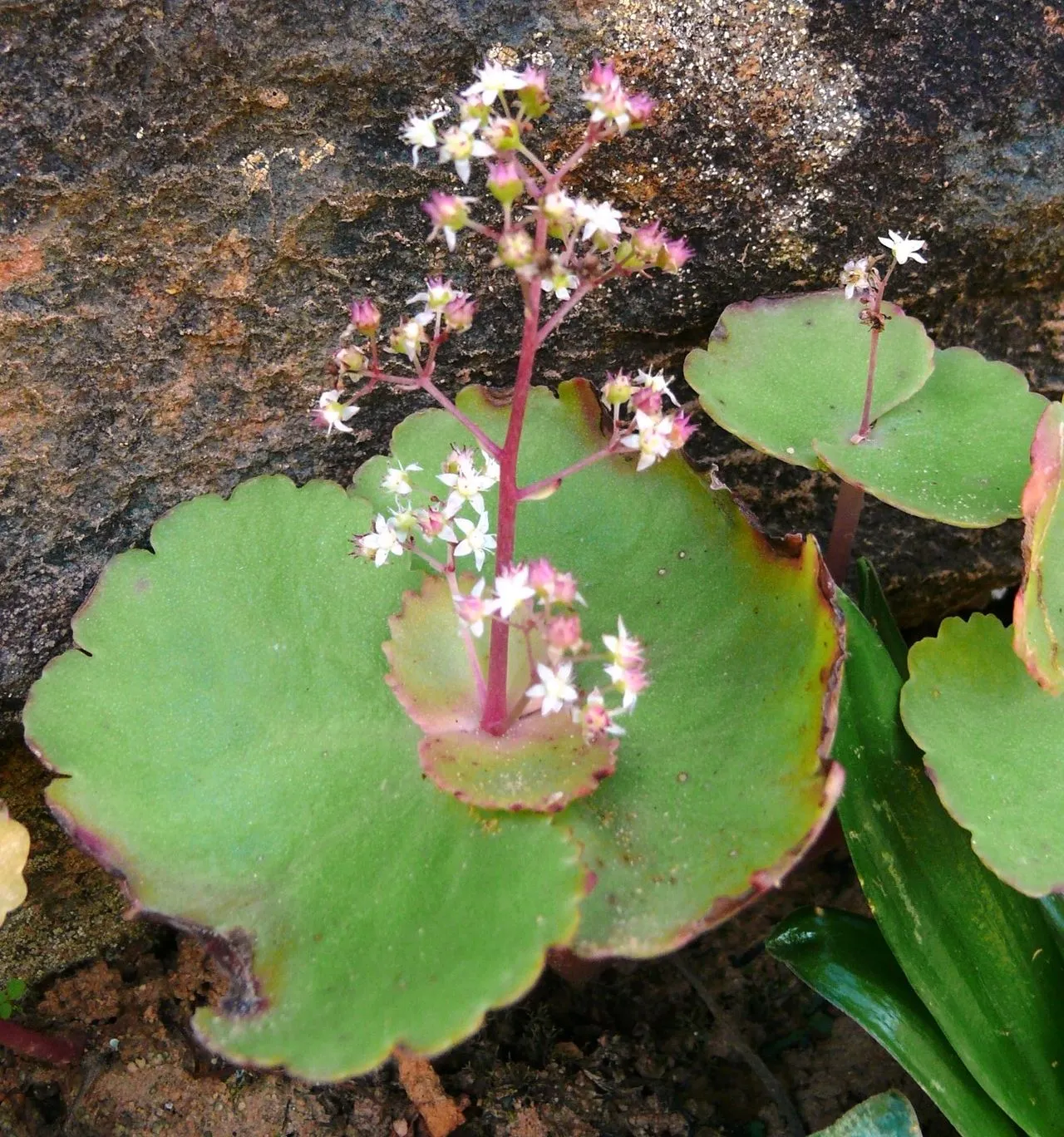
- Stem leaves. Along the flower stem, leaves are fused across the stem in pairs to form circular or bowl-shaped platforms perfoliate to the stem. Each pair looks like a shallow wine cup the stem passes through. Colour pale green, often flushed with red on the rim.
- Flowers. Small pale pink to red star-shaped flowers in loose clusters at the stem tip, held above the uppermost leaf cup. Produced in summer.
- Habit. A short-lived or tuberous-based perennial, often treated as biennial in cultivation. Reaches 10–20 cm tall in flower; the basal rosette alone is barely 5 cm across.
There is no other genus that produces this specific cupped-leaf structure, so identification is rarely in doubt once the plant is in flower-stem stage.
Cultivation
C. umbella diverges from the pillar defaults in one important respect: it tolerates and even prefers some shade.
Light: bright shade or filtered sun. Direct midday sun scorches the thin perfoliate leaves. An east-facing windowsill indoors or under-shrub placement outdoors suits it well.
Substrate: free-draining gritty mix, similar to the pillar default.
Water: moderate during active growth in spring and summer; reduce sharply once the flower stem dies back and the plant retreats to its basal rosette or tuberous base.
Temperature: minimum 5 °C. In the wild the plant experiences a cool dry winter rest, and cultivation should imitate that.
Propagation
Seed is the most reliable method and is how the species is normally perpetuated. Mature plants set seed freely on the spent flower stem; collect the ripe capsules, sow the fine seed on the surface of gritty mix in autumn, and keep at cool temperatures (10–15 °C) with bright indirect light. Germination takes 2–4 weeks.
Division of mature clumps is possible but the plants are short-lived enough that seed sowing produces better and younger stock.
Notes and Quirks
The perfoliate leaf pairs that give the plant its common name are a remarkable example of convergent evolution with the genus Eucalyptus and several other perfoliate-leaved groups, though the underlying developmental pathway differs. The cups hold dew and brief rainfall long enough for the plant's root system to absorb it, a relevant adaptation in its semi-shaded dry habitat.
Individual plants often persist only 2–3 years, setting seed heavily and then declining. Treat it as a short-lived curiosity rather than a long-term specimen.
See also
- Crassula alpestris
- Crassula alata
- Crassula obvallata
- Crassula cephalophora — another small rosette species with shade tolerance and a short stem.
Frequently Asked Questions
What light does this Crassula need?
Bright light is the default. Compact species and red-flushing cultivars need several hours of direct sun after gradual acclimation.
How should it be watered?
Water thoroughly, then allow the upper 3–4 cm of substrate to dry before watering again. In cool winter conditions, reduce watering sharply.
What substrate works best?
Use a free-draining mix with substantial pumice, grit, or perlite. Dense peat-heavy compost keeps the root zone wet too long.
How is it propagated?
Stem cuttings are the most reliable method for most Crassula. Leaf cuttings work on jade-type plants but are less useful for tight stacked miniatures.