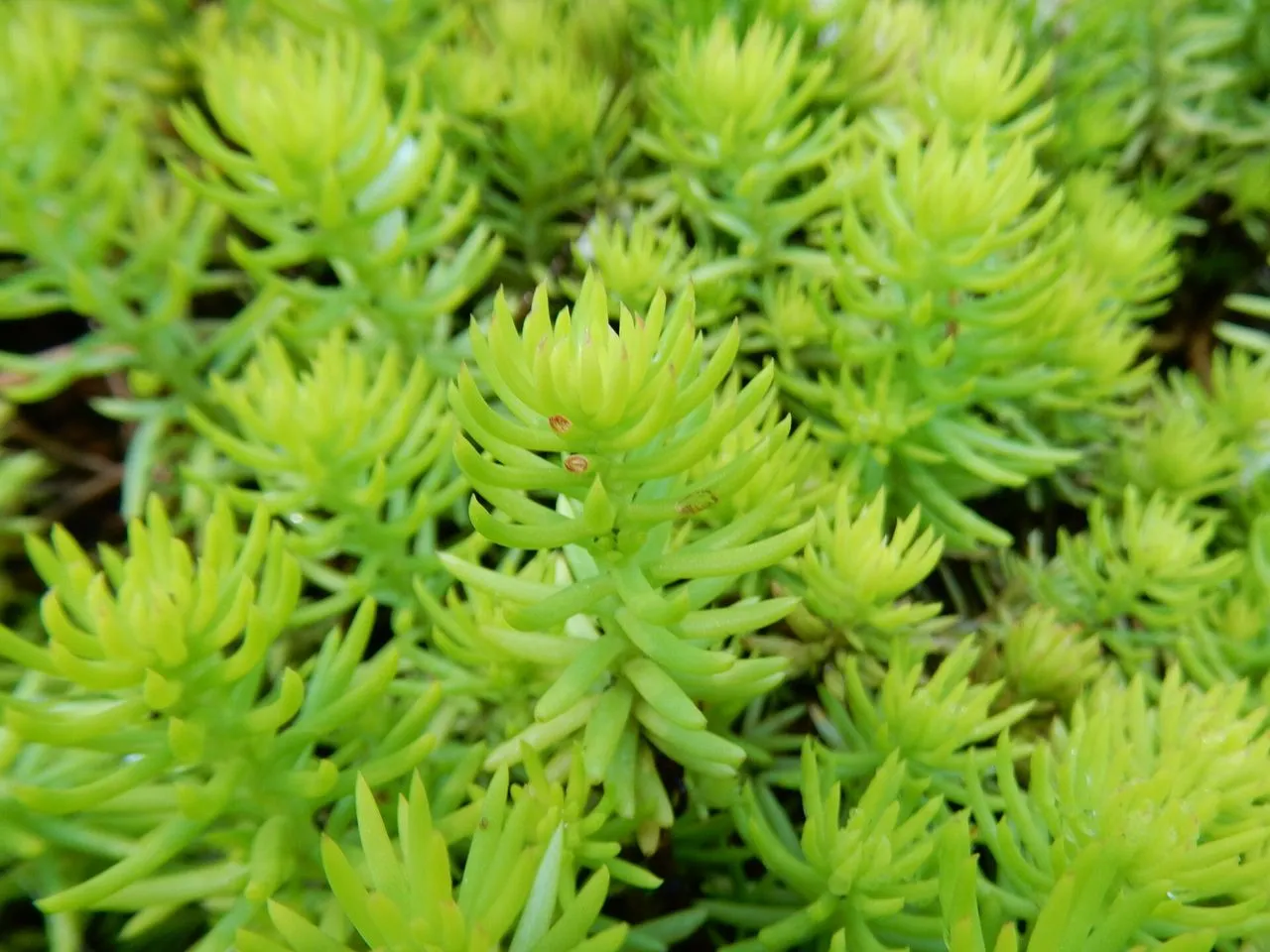
Brown leaf tips are a common observation across nearly all Sedum species and growing situations, and the causes range from entirely benign (drought you have already corrected) to actively progressing (rot or severe salt burn). The tip is often the first part of a leaf to show stress because it is the most distal — furthest from the water supply at the root — and because it receives the most sun exposure. Diagnosing by texture and the plant's recent history is faster and more accurate than examining the tip alone.
Part of the Complete Sedum Guide.
Drought and dehydration
The most common cause of brown sedum tips. When the root zone is too dry, the plant prioritises water delivery to the growing centre and draws on reserves in older and more distal tissue. Leaf tips — the furthest point from the roots — dry first. In most species the tip turns from green to pale tan-brown, becoming crisp and papery while the rest of the leaf stays green.
This pattern is widespread across the leaf canopy rather than isolated to specific sides or surfaces. The pot feels light, the substrate is dry through the full depth, and leaves may be slightly wrinkling elsewhere. In trailing species like Sedum morganianum, the round tip of each bead-shaped leaf browns distinctly and early, giving the whole tail a dusty appearance.
A thorough watering — slow and steady until water exits the drainage hole, then complete drainage — arrests the browning within 24 hours. Already-brown tips remain; new leaf growth from the stem tips will be undamaged. If the substrate has become hydrophobic (water runs off the surface rather than soaking in), bottom watering — setting the pot in a tray of water for 20–30 minutes — rewets a compacted mineral mix more effectively.
Sunburn
Sunburn produces brown or white-bleached patches on the tips and upper surfaces of leaves that were directly exposed to intense sun. This is most common after moving a plant from a shaded indoor position to full outdoor sun, or placing it near a south-facing window without acclimatisation. Sunburn damage appears within hours of sun exposure and does not progress once the plant is moved to shade.
Sunburn tips are crisp, dry, and often slightly depressed or papery compared to surrounding tissue. The damage is confined to the exposed surfaces — tips and the top surface of leaves facing the sun — and does not affect shaded lower surfaces or inner leaves. The damage is permanent but the plant survives; new growth in correct light will be undamaged.
Move to bright indirect light or filtered sun and increase direct sun exposure gradually (7–14 days) when acclimatising any sedum to stronger light. The sunburn diagnosis and recovery guide covers the acclimatisation protocol in full.
Cold damage and frost
Cold damage produces brown or black tips that appear 12–48 hours after a cold event. On frost-sensitive tender sedum species — S. morganianum, S. rubrotinctum, S. adolphi — temperatures below 3–5 °C cause ice crystal formation in the tips first, as they have the least thermal mass and are most exposed. The damage starts as waterlogged-looking (glassy) patches that dry to brown or black within 48–72 hours.
Cold-damaged tips do not spread after the plant is brought to warmth. The damage is fixed and cosmetic, provided the growing stems and crown are unaffected. Do not water for 2 weeks after a cold event. Remove fully dry, papery damaged tip tissue only once it has stabilised and stopped advancing.
Hardy outdoor sedums (Hylotelephium telephium, S. spurium, S. kamtschaticum) are frost-tolerant to −20 °C or below and do not show tip browning from cold — the cause of browning in these species is almost always drought, aphid damage, or salt accumulation.
Fertiliser salt burn and hard water accumulation
Excess soluble salts — from heavy fertilisation, regular hard tap water, or salts accumulating in a pot that is never flushed — cause a specific tip-burn pattern: a narrow, brown, crisp margin at the very tip of the leaf, often with a pale yellow zone between the brown margin and the healthy green tissue. Unlike drought-caused browning, which appears across the whole tip broadly, salt-burn tip scorch is more precise and uniform across all leaves simultaneously.
Flush the substrate thoroughly: water slowly and heavily two or three times in succession, allowing water to run through and out, carrying dissolved salts with it. Or repot into fresh substrate. Reduce fertiliser frequency — for most outdoor sedums, one application of balanced fertiliser in early spring is sufficient. Switch to rainwater or reverse-osmosis water if hard tap water is leaving white mineral deposits on the pot rim.
Root rot progressing to tip necrosis
When root rot is advanced, the reduced root system cannot supply adequate water to the leaf canopy, and the tips of leaves die first as the most distal tissue. This brown-tipping from root failure is accompanied by other root rot signs: wet substrate, sour smell, soft lower leaves, or dark discolouration at the stem base. The tip browning alone does not confirm root rot — it must be read alongside these other indicators.
If root rot is the cause, watering more will worsen the tip browning, not help it. The priority is root diagnosis: unpot, cut dead roots, dry, repot. Tip browning from root damage resolves once a functioning root system re-establishes, but the already-browned tips will remain.
How to identify the cause
| Pattern | Texture | History | Other signs | Most likely cause |
|---|---|---|---|---|
| Brown tips on many leaves simultaneously | Crisp, dry | Dry substrate | Lightweight pot | Drought |
| Brown/white patches on tip and upper surface | Crisp, papery | Recent sun exposure | One-sided (sun-facing) | Sunburn |
| Dark brown or black tips, appeared after cold | Dry after initial waterlogged phase | Recent cold event | Low temperature | Frost/cold damage |
| Uniform narrow brown tip margin | Crisp | Regular fertilising or hard water | White crust on pot | Salt burn |
| Brown tips with wet stem base or sour smell | Variable | Wet substrate history | Soft lower leaves | Root rot |
Risk and severity
Drought and sunburn browning are low-risk and cosmetic — tip tissue is dead but the plant survives and new growth is undamaged. Salt burn is progressive if the source of salts is not addressed. Root-rot-induced tip browning is the highest-risk cause and requires root inspection within the same day. Cold damage is fixed and non-progressive once the plant is warmed.
Solutions
Drought
Water thoroughly once. Resume the dry-down schedule. In summer, check substrate every 5–7 days rather than on a fixed calendar.
Sunburn
Move to bright indirect light. Acclimatise gradually to any future increase in light. The tip scars are permanent.
Cold damage
Bring indoors above 10 °C. Do not water for 2 weeks. Let damaged tissue dry. Protect from similar exposure.
Salt burn
Flush substrate 2–3 times. Reduce fertiliser. Consider switching to rainwater. Repot if salts are heavily accumulated.
Root rot tip browning
Unpot, cut dead roots, dry bare-root 3–5 days, repot in fresh dry mineral mix. Wait 7 days before first watering. Tip browning will not worsen once functional roots are re-established.
Prevention
Match watering to substrate dryness rather than a fixed schedule. In summer, check weekly. Use a freely draining mineral mix. Acclimatise plants gradually when increasing light exposure. Fertilise lightly — once in spring with balanced feed is enough for most hardy sedum. Flush the pot through with water occasionally if using hard tap water. Check the wet-dry cycle explained guide for maintaining correct moisture rhythms across different seasons.
See also
- Sunburn diagnosis and recovery — assessing and preventing sunburn on sedums moved between light environments.
- Root rot diagnosis — confirming and treating root rot when tip browning is accompanied by wet, sour root zone conditions.
- Sedum morganianum — the trailing sedum most prone to drought tip browning; includes watering guidance for its compact bead-shaped leaves.
Frequently Asked Questions
Why are the tips of my sedum leaves turning brown?
The most common reasons are drought (tips dry first as the plant withdraws water to the centre), sunburn (tips are the most exposed part of the leaf), or salt accumulation from fertiliser or hard water.
Will brown sedum tips grow back green?
No. Brown, dead tip tissue cannot regenerate. The goal is correcting the cause so new growth from the stem tips and new leaves emerge undamaged.
Can I cut the brown tips off my sedum?
Yes, if the underlying cause has been resolved and the remaining leaf is healthy. Cut with clean, sharp scissors at the junction of live and dead tissue. On trailing types like S. morganianum, removing leaf tips is not necessary — leaves are eventually shed naturally.
Why are the tips of my Sedum morganianum leaves brown?
Usually drought — donkey's tail is particularly susceptible to tip browning when under-watered. The round leaf tips dry and brown before the rest of the leaf. Water thoroughly when the substrate is dry. Also check for direct midday sun exposure, which burns the tips of sun-facing leaves.