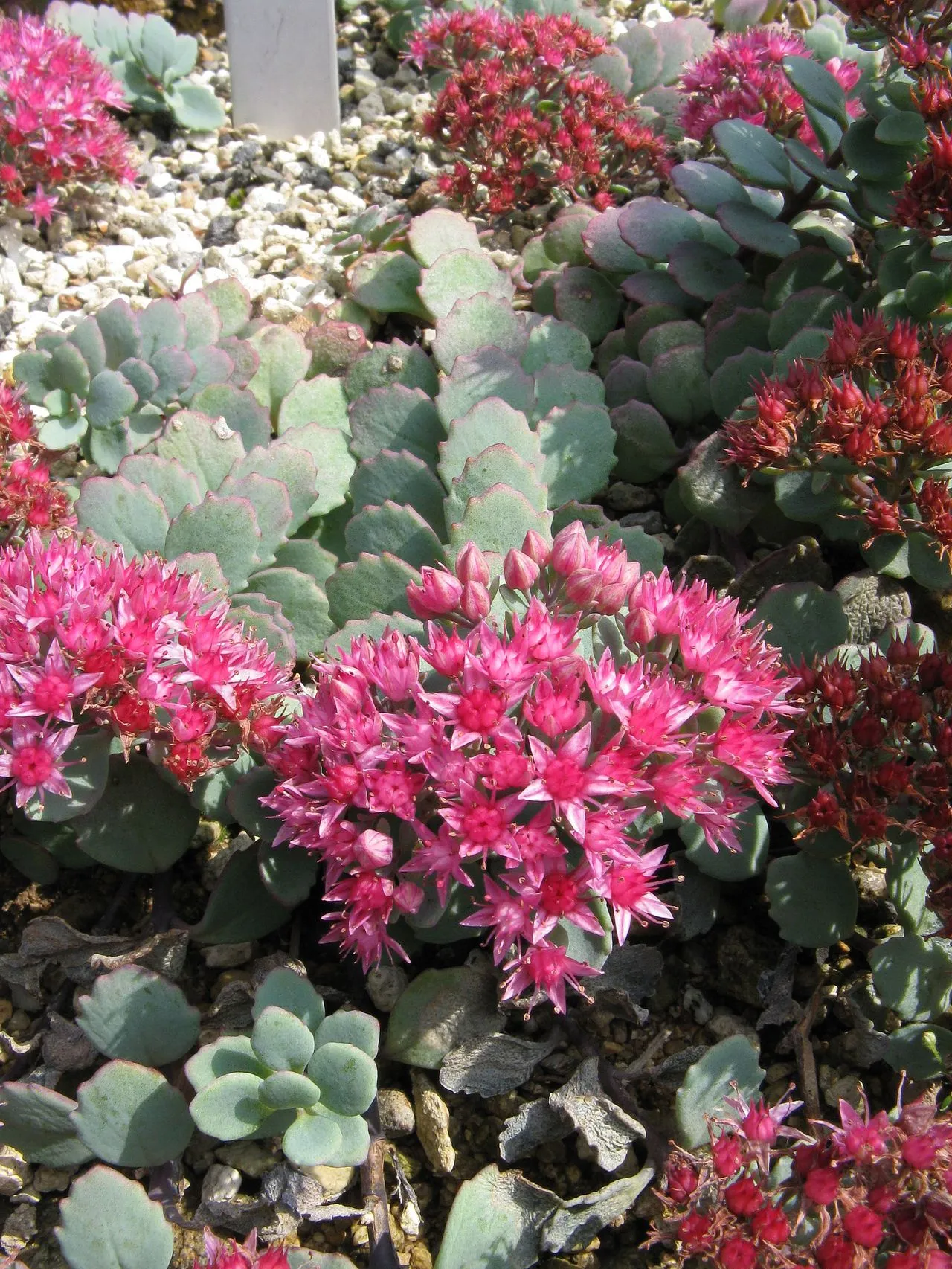
In mat-forming and creeping Sedum, leaves falling off at scale — not scattered single-leaf senescence, but the shedding of whole interior stem sections or entire canopies — is a phenomenon that has different causes from the individual-leaf drop that sedum leaves dropping covers. A hardy Sedum acre or Sedum album mat naturally loses its older inner stems each winter; upright Hylotelephium drops every leaf in autumn as the entire plant goes deciduous; and tender species lose leaves rapidly after frost exposure. Understanding the pattern, the season, and the affected part of the plant is the diagnostic first step before any intervention.
Part of the Complete Sedum Guide.
Seasonal die-back in mat-forming hardy species
Hardy mat-forming sedums — Sedum acre, S. album, S. spurium, S. kamtschaticum, S. sexangulare, S. lineare — maintain a living layer of stems and leaves at the surface while older stems beneath the mat naturally die back through autumn and winter. This die-back manifests as brown, dried stems in the interior of the mat, with leaves that are papery and light and fall or blow away at a touch. The dead material is visible if you part the living surface layer.
This is not rot, not pest damage, and not a deficiency — it is the annual renewal cycle of these low-growing ground-cover plants. The mat regenerates from the actively growing outer edges and from healthy upper stems, which root into the ground at each node and produce new growth in spring. An established S. acre or S. album mat sheds a significant proportion of its interior leaves each autumn without any reduction in overall surface health.
The diagnostic test is straightforward: pick up one of the falling leaves. It should be completely dry, papery, and light brown or translucent, with no moisture or odour. If it is dry, no action is required. If it is wet, slimy, or foul-smelling, this is crown rot or overwatering — see the relevant section below.
If the dead interior material is cosmetically objectionable, rake it out in late autumn or early spring with a stiff-tined rake before new growth begins. Raking also improves airflow through the mat and reduces the moisture retention that can predispose to crown rot in wet winters. This is the only maintenance these species require for leaf-fall management.
Deciduous drop in Hylotelephium border types
The upright border sedums — Hylotelephium telephium and its cultivars ('Autumn Joy', 'Matrona', 'Purple Emperor', 'Autumn Fire') and H. spectabile cultivars ('Brilliant', 'Stardust') — are deciduous herbaceous perennials. After flowering in late summer through autumn, the stems and leaves die back progressively over several weeks. Leaves yellow, then brown, then fall or blow away, leaving bare stems with dried seed heads standing above the crown. By mid-to-late winter, the stems are bare sticks with no attached leaves.
This leaf fall routinely alarms gardeners encountering these plants for the first time, particularly those who expect "sedum" to behave like the evergreen mat-forming ground-cover species. The difference is complete: Hylotelephium is herbaceous. Every leaf falls every winter. The crown below the soil level is dormant and will regenerate new stems in spring from dormant buds at the base.
What to do: leave the standing stems in place through winter. They provide two practical functions — frost protection for the crown, and a location marker that prevents the plant being accidentally damaged when the bed is cleared of debris. Cut the stems back to just above ground level in March when new pink or green nubs are visibly emerging from the crown. If you cut in November instead, you lose the frost protection and risk the crown being disturbed. The seed heads also have wildlife value — birds including goldfinches take seed from the dried heads through winter.
If the crown in early March produces no visible growth nubs, the plant may have died. Probe around the crown area with a finger — firm, slightly fleshy tissue that is white or pale beneath the soil surface indicates a living dormant crown. Soft, dark, and foul-smelling crown tissue indicates crown rot during winter — see below.
Frost damage on tender species
Tender Sedum species — S. morganianum (burro's tail), S. rubrotinctum (jellybean plant), S. nussbaumerianum (coppertone stonecrop), S. adolphi (golden sedum), S. palmeri — are damaged by temperatures below approximately –1 °C, even briefly. A plant left outdoors overnight when temperatures dip below 0 °C will show visible damage within hours.
Frost-damaged leaves progress through a recognisable sequence: they become translucent and water-soaked in appearance within hours of exposure, then darken to pale grey or muddy brown within 12–24 hours, then collapse into soft, wet, mushy tissue that falls from the stem within 48–72 hours. In severe cases the stem tissue beneath the leaf attachment points is also damaged and softens.
This is distinct from all the normal drop patterns described above: frost-dropped leaves are wet and dark when they fall, not dry and papery. They fall on a specific timeline following a cold event, not gradually through the season. And the affected species are always tender types — hardy S. acre or Hylotelephium does not show this pattern from normal autumn temperatures.
If frost damage is identified early — before the stem tissue is affected — emergency recovery is possible. Remove all translucent or darkening leaves immediately. Move the plant to a frost-free environment above 5 °C. Do not water while the plant is in a stressed state. If the stem tissue beneath the damage zone is still firm and green, the plant can regenerate from the remaining healthy stem. For the full triage and recovery procedure, see frost damage recovery.
Crown rot causing mass leaf fall
When crown rot progresses from the base of the plant upward — typically following a prolonged period of cold, wet substrate around the crown — leaves on affected stems fall rapidly. The pattern is distinct from frost damage or seasonal die-back: leaves fall from one section of the plant while adjacent sections appear temporarily normal; the fallen leaves are wet or slimy when examined; and the stem base at soil level is soft, dark brown to black, and smells foul.
Crown rot in sedum most commonly follows winters where drainage was inadequate — plants in clay soil that retains water through the cold months, or containers without working drainage holes left sitting in wet conditions. Water moulds (Phytophthora spp., Pythium spp.) infect crown tissue when the substrate is consistently saturated for weeks at low temperatures. The rot progresses upward through the crown and into the lower stem sections.
Act immediately on crown rot symptoms. Cut the affected stem or crown tissue back to clean, firm material with a sterile blade. If only one or two stems are affected and the crown itself is still firm, targeted cutting and improved drainage gives the plant a reasonable recovery chance. If the central crown tissue is the source of rot — identifiable by pressing into the tissue at the base of all stems and finding softness at the common origin point — the plant is unlikely to recover fully. Take cuttings from any unaffected stem tissue before attempting further recovery. See sedum dying back for the broader stem-death and collapse scenario.
Unpot the plant, remove all wet substrate, and allow the cut surfaces to dry open in shade for 24–48 hours. Dust cut surfaces with powdered sulphur or a proprietary copper-based fungicide to slow fungal spread. Replant in fresh, dry, very free-draining substrate — at least 50% pumice or perlite — and do not water for 7–10 days after replanting.
Identifying the cause
| Leaf condition at drop | Timing | Species type | Cause |
|---|---|---|---|
| Dry, papery, light brown | Autumn–winter | Hardy mat-former | Normal seasonal renewal |
| Dry or brown, all leaves | October–January | Hylotelephium | Normal deciduous die-back |
| Wet, translucent, darkening rapidly | After frost event | Tender species | Frost damage |
| Wet, dark, slimy at stem base | Any season | Any | Crown rot |
| Mushy, with soft lower stem and wet substrate | Any season | Any | Overwatering / root rot |
Risk and severity
Seasonal mat die-back and Hylotelephium autumn drop: no risk. Expected annual behaviour; no action required.
Frost damage on tender species: moderate to high risk depending on how much stem tissue is affected. A plant with leaf damage only but a firm stem is recoverable. A plant where the stem and crown are also softened is unlikely to survive in its current form — prioritise taking cuttings from any healthy tissue above the damage zone.
Crown rot: high risk. Crown rot kills plants faster than root rot because it destroys growing points directly. Do not monitor and wait — act on the first day of identification. Recovery rates from crown rot are significantly lower than from root rot, and the window for effective intervention is short.
Solutions
Seasonal die-back in mat-formers
No intervention required. If cosmetically objectionable, rake out dried interior material in late autumn or early spring. Do not attempt to remove it in summer — you will damage living surface stems.
Hylotelephium autumn drop
Leave standing stems through winter. Cut to ground level in March when new crown growth is visible. Do not cut in autumn.
Frost damage response
Remove all damaged (translucent, darkening, mushy) tissue. Move plant to frost-free conditions above 5 °C. Do not water. See frost damage recovery for the complete procedure.
Crown rot
Excise all soft, dark crown and stem tissue with a sterile blade to clean material. Dry cut surfaces 24–48 hours in shade. Repot in fresh dry mineral-heavy mix. Do not water for 7–10 days.
Prevention
Improve drainage for all sedum before winter: in clay beds, raise and grit-amend the planting zone; in containers, ensure drainage holes are fully open and stand pots on feet. For mat-forming sedums, rake out dead interior material in late autumn to improve airflow and reduce moisture retention. Move tender species indoors by the time night temperatures approach 5 °C. Do not water any sedum excessively in autumn — the substrate should be on the dry side entering the cold season.
See also
- Sedum leaves dropping — individual leaf drop including S. morganianum fragile attachment, overwatering, drought, and repotting shock.
- Frost damage recovery — emergency triage for tender sedum caught by frost; timing, tissue assessment, and re-establishment steps.
- Sedum dying back — broader stem death and plant collapse including crown rot and root rot affecting multiple or all stems.
Frequently Asked Questions
Is it normal for sedum to lose a lot of leaves in autumn?
Yes for two distinct reasons. Mat-forming species such as S. acre and S. album shed interior stems as part of their annual growth cycle. Hylotelephium types (the tall border sedums) are deciduous herbaceous perennials — every leaf on every stem falls between October and December, leaving bare stems until spring. Neither requires any intervention.
My sedum's leaves are turning wet and falling off — what is wrong?
Wet, translucent, or dark falling leaves indicate overwatering, root rot, frost damage on a tender species, or crown rot at the stem base. Feel the substrate and inspect the stem base. A wet substrate and dark basal stem signals crown rot — act immediately by removing the plant from the substrate and cutting away affected tissue.
Will a sedum with all its leaves fallen off in winter recover?
For Hylotelephium types, yes — this is normal dormancy. Check for pink or green growth nubs at the crown in early spring. If they are present, the plant is alive. For other sedum species that have lost leaves due to rot or frost, recovery depends on whether the stem or crown tissue is still firm and healthy.
How do I tell normal sedum leaf fall from disease?
Normal leaf fall produces dry, papery leaves in autumn. Disease, overwatering, frost damage, or crown rot produce wet, dark, translucent, or slimy leaves that may fall at any season, and are often accompanied by soft or discoloured stem tissue at the base.