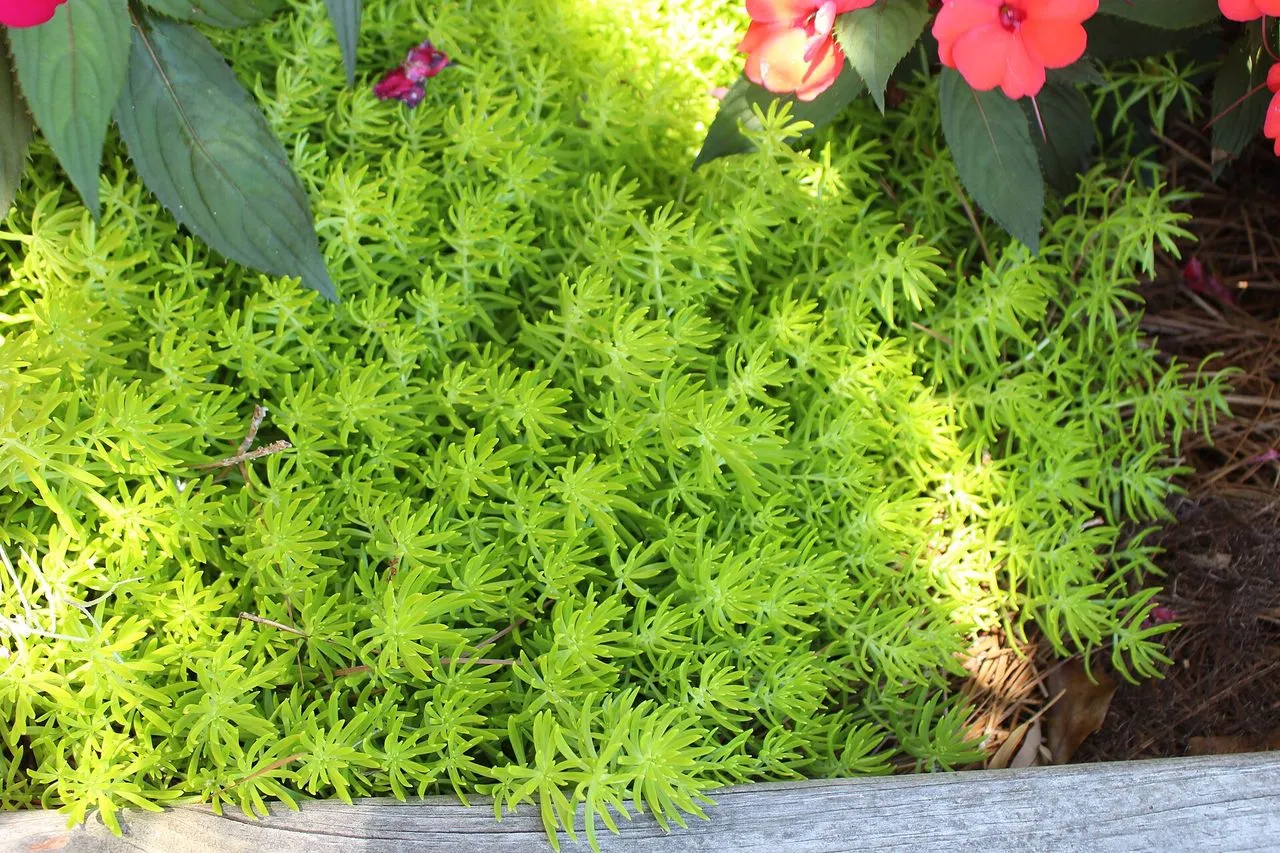
"My sedum is dying" is one of the most common autumn messages in gardening communities — and in most cases, the plant is not dying at all. It is going dormant. Understanding which sedums are herbaceous perennials (which die back) versus which are evergreen succulents (which do not) is the first diagnostic step, and it determines whether to investigate further or simply wait for spring.
Part of the Complete Sedum Guide.
Normal winter dormancy in hardy Hylotelephium and border sedums
The large, upright border sedums — now more correctly classified as Hylotelephium but still widely sold and grown as Sedum telephium, S. spectabile, S. 'Autumn Joy', S. 'Herbstfreude' — are herbaceous perennials. They produce tall stems with fleshy leaves from spring through summer, flower in late summer and autumn, then die back completely to a dormant crown at or just below soil level. The stems yellow, brown, collapse, and eventually become papery. This is not disease; it is the natural seasonal rhythm.
The dead stems can be left through winter — they provide overwintering structure for insects, and the old flower heads hold seeds attractive to birds. Cut them back to 5 cm in early spring, just before new growth pushes from the crown. New shoots emerge from the crown in March to April in temperate climates. A plant that appears completely dead through January will often be showing green nubs by the end of March.
Sedum spurium (two-row stonecrop) and S. kamtschaticum are semi-evergreen in mild climates but lose much of their top growth in cold winters. The mat may look ragged and brown from November to February but pushes new growth from the same stems in spring. Do not cut these back hard in autumn; wait until spring to assess what has survived and trim only genuinely dead material.
Natural mat thinning in ground-cover sedums
Creeping sedum mats — Sedum acre (gold moss), S. album, S. dasyphyllum — grow outward from the edges while the inner and oldest portions gradually become woody, die, and leave gaps. This central die-out is normal over 3–5 years and accelerates in poorly draining soil or areas that stay wet in winter.
Management is straightforward: cut away dead central sections with scissors or a sharp edger, loosen the soil, and replant young cuttings from the healthy outer edges into the cleared space. Amend the soil with grit or coarse sand if drainage is poor. Do not try to revive the dead interior — it will not recover.
Root rot causing active dieback
Pathological dieback in Sedum during the growing season is most often root rot, and it looks very different from dormancy. The diagnostic features:
- Stems begin dying at or near the soil surface and progress upward, not from the tips inward.
- Affected stems may be dark (brown-black) or slimy at the base before they collapse.
- The surrounding soil may smell sour.
- Living adjacent stems may be unaffected, creating a patchy dying-out rather than a uniform decline.
- The timing is wrong for dormancy — this happens in spring, summer, or early autumn when the plant should be in active growth.
Root rot in sedum is caused by the same conditions as in any succulent: waterlogged soil, poor drainage, and roots deprived of oxygen. In the garden, compacted clay soil, a low-lying position that collects water, or a crown planted too deep (below the surface moisture layer) are common culprits. In pots, peat-heavy mix, oversized containers, and insufficient drainage holes create the same conditions.
Dig and inspect. Healthy sedum roots are firm and white to tan. Rotting roots are black, slimy, and pull apart with no resistance. Remove affected plants, amend the soil with coarse grit to improve drainage, and replant healthy sections from the outer growth in a better-draining spot. Do not replant into the same wet area without drainage improvement.
Vine weevil damage
In the UK and parts of northern Europe, vine weevil (Otiorhynchus sulcatus) is a significant cause of sedum dieback in containers and garden beds. The larvae are C-shaped cream grubs up to 10 mm long that feed on roots from late summer through winter. A container sedum that wilts and collapses in late summer or autumn despite adequate watering — particularly in a peat-based or organic-rich compost — is a prime candidate.
Dig into the compost around the root zone. Vine weevil larvae are unmistakeable: cream-coloured, legless, with a pale brown head, curled in a C-shape. Even two or three grubs can devastate the root system of a container plant. Treatment options include biological control (nematodes applied when soil temperature is above 5 °C, typically spring and early autumn), or systemic insecticide drenches containing thiacloprid or acetamiprid applied as a soil drench in early to mid-summer before grub populations peak.
Summer heat stress and dieback in tender sedums
Some tender sedums — particularly those from Mediterranean or semi-arid regions — experience summer heat-stress dieback of older stems. S. adolphi, S. nussbaumerianum, and S. palmeri may drop older basal leaves and die back lower stems when temperatures exceed 35 °C consistently. This is a stress response rather than a pathology, but it can be alarming in a heatwave. Provide afternoon shade in regions with consistently high summer temperatures, ensure the substrate can dry quickly, and avoid watering in the hottest part of the day.
How to distinguish normal dieback from pathological
| Feature | Normal dormancy | Root rot / pest damage |
|---|---|---|
| Season | Autumn/winter | Growing season (spring–autumn) |
| Progression | Top-down, whole plant | Base-up, often patchy |
| Stem texture at base | Dry, papery | Slimy, black, or hollow |
| Smell | None | Sour (rot) |
| Adjacent stems | Also dying back uniformly | May still be healthy |
| New growth in spring | Yes, from crown | Absent or weak |
Risk and severity
Normal dormancy requires no action beyond patience. Root rot during the growing season is serious and requires same-day excavation and intervention to prevent it spreading through a mat. Vine weevil is moderate risk in containers but can destroy a plant's root system over a single winter without visible symptoms until the plant collapses in the following growing season.
Prevention
Plant border sedums in well-drained soil or raised beds; avoid waterlogged positions. For container plants, use a freely draining mineral mix and ensure drainage holes are not blocked. In regions with known vine weevil pressure, apply nematode biological control in early autumn and inspect container root zones at repotting. Accept and plan for the winter dormancy of herbaceous sedum species — mark their positions so they are not accidentally dug up in winter.
See also
- Root rot diagnosis — the full diagnosis and recovery procedure for sedum root rot.
- Sedum telephium — the most commonly grown herbaceous border sedum; the benchmark for normal winter dormancy.
- Sedum spurium — a semi-evergreen ground-cover sedum that partially dies back in cold winters but recovers from the same stems in spring.
- Sedum kamtschaticum — another semi-evergreen species that looks ragged in winter but regenerates from existing stems each spring.
Frequently Asked Questions
My outdoor sedum has collapsed and turned brown in autumn — is it dead?
Almost certainly not. Hardy Hylotelephium (formerly Sedum) species and many other outdoor sedums are herbaceous — they die back completely to a dormant crown each autumn and resprout from ground level in spring. Leave the dead stems through winter for insect habitat and structure; cut them back to 5 cm in early spring.
What is killing my sedum from the ground up during summer?
The most likely causes are root rot (from overwatering or poor drainage in the crown area) or vine weevil grubs eating the roots. Both require digging and inspection of the root zone. Slimy black roots mean rot; C-shaped cream grubs in the root zone mean vine weevil.
Why is my sedum mat thinning and dying in patches?
Ground-cover sedums (S. acre, S. album, S. spurium) thin in the centre as the mat ages — old stems become woody and die while the edges continue to grow. Cut the old dead sections away and replant young healthy edges into the cleared space.
Can a sedum recover from crown rot?
Rarely, if the growing crown at soil level is completely rotted. If outer sections of a mat have healthy, actively growing edges, those can be detached and replanted in fresh, well-drained soil away from the wet spot that caused the original rot.