| Question | Short Answer |
|---|---|
| How is Autumn Fire different from Autumn Joy? | Autumn Fire has thicker stems and a deeper final flower colour. |
| How tall does Autumn Fire sedum grow? | Mature clumps are 45–60 cm tall and roughly as wide, with flower heads 10–15 cm across. |
| Does Autumn Fire need staking? | Usually no. |
| When should Autumn Fire be cut back? | Leave the dried flower heads through winter if you want structure and bird value, then cut old stems to ground level in February or March before new growth emerges. |
Sedum 'Autumn Fire' (now correctly Hylotelephium telephium 'Autumn Fire') is a late-summer herbaceous perennial selected as an improvement over the older and more famous S. 'Autumn Joy' (H. telephium 'Herbstfreude'). It was introduced by Skagit Gardens in the 1990s and has steadily replaced the original in well-run nurseries because it holds its stems upright for an extra few weeks each autumn.
'Autumn Fire' belongs to the upright herbaceous group of the genus, the same clade that taxonomists formally transferred out of Sedum and into Hylotelephium H.Ohba several decades ago. You will see the plant labelled under either name in the trade; functionally they are the same thing.
Part of the Complete Sedum Guide.
Identification
'Autumn Fire' forms a clump 45 to 60 cm tall and roughly as wide at maturity. Key diagnostic features:
- Stems. Stout, erect, unbranched, pale green flushing to purple-red at the base late in the season. Noticeably thicker than the stems of 'Autumn Joy', which is the cultivar's chief selling point.
- Leaves. Broad, obovate, 5 to 8 cm long, glaucous grey-green, with coarsely toothed margins. Arranged in whorls of three along the stem.
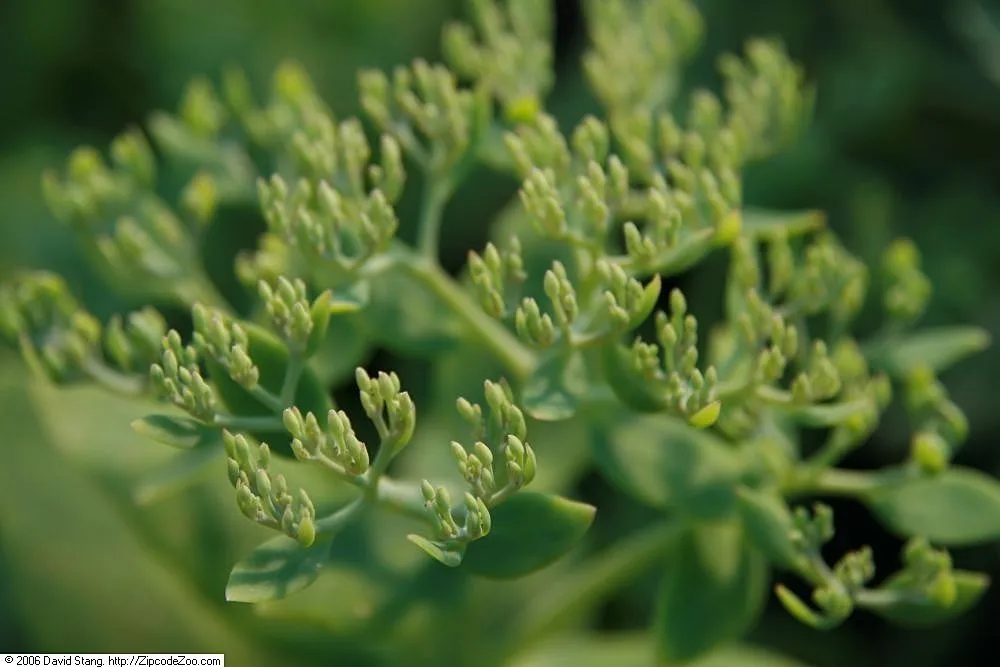
- Inflorescence. A dense flat-topped cyme 10 to 15 cm across, opening rose-pink in late August and deepening to a brick-red over several weeks before drying to russet-brown in November. The colour shift is more saturated than on 'Autumn Joy'.
Tell it from 'Autumn Joy' by stem calibre and flower-colour depth. Tell it from 'Matrona' (darker foliage) and 'Purple Emperor' (deep purple leaves) by leaf colour, which on 'Autumn Fire' is straight glaucous green.
Cultivation
Grow as for the rest of the upright Hylotelephium group: full sun, sharp drainage, lean soil, no supplemental feeding. Cold-hardy to USDA zone 3; dies back to ground level each winter and re-emerges from crown buds in spring.
The divergence from the pillar's generic advice is mainly about staking. 'Autumn Fire' is bred specifically so you do not have to stake it. In a bed with too much nitrogen or too little sun, even this cultivar will flop. If stems start to splay open in mid-June, apply the Chelsea chop: cut the entire clump back by a third with clean secateurs. The plant re-shoots shorter, denser, and will hold through autumn wind without support.
Do not mulch heavily over the crown in winter. The dormant buds sit just below soil level and are prone to fungal crown rot under wet mulch. A gravel dressing is better than bark or straw.
Propagation
Stem cuttings are the fastest method. Take a 10 to 15 cm non-flowering shoot in late spring, strip the lower leaves, push the bare stem 5 cm into gritty substrate. Roots form within two weeks.
For bulk increase, division is the standard method. Lift the whole clump in early spring as new shoots emerge, split the crown with a spade into sections each carrying three to five buds, replant at the original depth. Established clumps benefit from division every four to five years to prevent the bare-middle look.
'Autumn Fire' is a named cultivar and will not come true from seed. Seed-raised plants will segregate into a mixed population; for the named selection stick to vegetative methods.
Notes
'Autumn Fire' is frequently mis-sold as the superior version of 'Autumn Joy', and the description is fair up to a point. Side-by-side trials at Mount Cuba Center and elsewhere confirmed the stronger stems and deeper final colour, but the two cultivars are closely similar for the first month of bloom. If you already have a well-behaved 'Autumn Joy' that does not flop, there is no reason to replace it.
The dried flower heads persist through winter and are useful for both structural interest in the border and seed for small birds. Leave them until February or March, then cut the old stems at ground level before new shoots push through. Pollinators, particularly late-season bumblebees and hoverflies, work the flowers heavily through September and October.
'Autumn Fire' is patented in some jurisdictions; check the plant tag before dividing for sale. Home propagation for private use is not restricted.
See also: Sedum telephium, Sedum Dazzleberry, SunSparkler Sedum, How to dry sedum — Autumn Fire heads dry well for wreaths and winter arrangements.
Frequently Asked Questions
How is Autumn Fire different from Autumn Joy?
Autumn Fire has thicker stems and a deeper final flower colour. The two look similar early in bloom, but Autumn Fire holds upright longer.
How tall does Autumn Fire sedum grow?
Mature clumps are 45–60 cm tall and roughly as wide, with flower heads 10–15 cm across.
Does Autumn Fire need staking?
Usually no. On too much nitrogen or too little sun it can still splay; a June Chelsea chop by one-third restores shorter sturdier stems.
When should Autumn Fire be cut back?
Leave the dried flower heads through winter if you want structure and bird value, then cut old stems to ground level in February or March before new growth emerges.