| Question | Short Answer |
|---|---|
| Is Lemon Coral sedum hardy? | Only in USDA zone 9b and warmer for permanent outdoor planting. |
| How is Lemon Coral different from Angelina? | Lemon Coral is tender and has slightly longer, spaced leaves in whorls. |
| How large does Lemon Coral get? | It forms a mounding to trailing plant 15–20 cm tall and can spread to 40 cm in a single growing season. |
| How do you propagate Lemon Coral sedum? | A 5 cm stem fragment roots in days when pushed halfway into moist substrate. |
'Lemon Coral' is a cultivar of Sedum mexicanum Britton (Mexican stonecrop), introduced by Proven Winners and patented as a vegetatively propagated selection. It is the tender counterpart to the hardy Sedum Angelina, offering similar chartreuse needle foliage but in a plant bred for summer container and bedding use rather than permanent rock-garden planting.
S. mexicanum is, despite its name, of uncertain wild origin. It has been known in cultivation for over a century and is naturalised across warm-temperate regions, but no confirmed wild populations are documented in Mexico. The species is placed in the mat-forming creeper group of the genus but is unusually tender for a mat sedum.
Part of the Complete Sedum Guide.
Identification
A mounding to trailing stem-succulent, 15 to 20 cm tall and spreading to 40 cm in a single season.
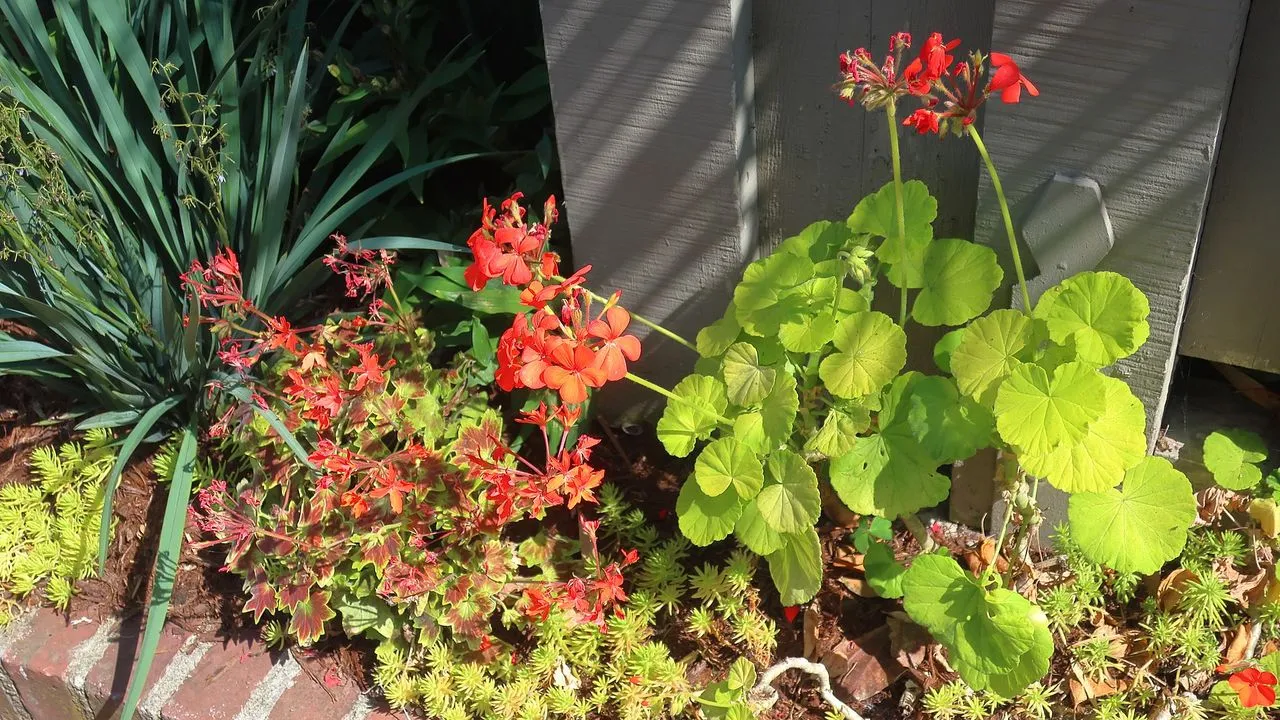
- Leaves. Needle-like, terete, 1 to 1.5 cm long, whorled in groups of four or five along the stem. Colour is bright chartreuse to acid yellow year-round under sun, slightly greener in part shade.
- Stems. Lax and trailing, rooting at nodes where they touch substrate.
- Inflorescence. Small yellow stars in summer, modest and not a primary ornamental feature.
Tell 'Lemon Coral' from S. rupestre 'Angelina' by hardiness and by leaf arrangement: 'Angelina' has more densely spirally set needles and is cold-hardy to zone 3; 'Lemon Coral' is tender below roughly −3 °C and has slightly longer, more spaced leaves in whorls.
Cultivation
This is the point of divergence from the pillar's generic sedum advice. 'Lemon Coral' is marketed and used as a summer bedding annual in cold-winter climates, not as a permanent hardy groundcover.
- Light. Full sun gives the best colour. Part shade is tolerated but leaves will revert toward green and stems stretch slightly.
- Temperature. Frost tender; USDA zone 9b and warmer for permanent outdoor planting. In zones 8 and below, treat as an annual or overwinter indoors.
- Substrate. Ordinary container compost amended with 30 per cent grit. Performs well in hanging baskets and mixed-annual pots where its trailing habit falls over the rim.
- Water. More forgiving than hardy sedums; tolerates weekly watering in summer. In arrangement pots with thirstier companions it keeps pace without sulking.
The cultivar is specifically useful as the "filler" or "spiller" component of a three-part container composition, because its colour carries visually across distance and its growth fills gaps within weeks.
Propagation
Stem cuttings root in days. Break off a 5 cm fragment, push half its length into moist substrate, and keep bright. No callusing needed. This is the fastest-rooting sedum in common cultivation.
Note that 'Lemon Coral' is patent-protected in the US and several other jurisdictions. Home propagation for personal use is unrestricted; commercial propagation for resale requires a licence from the breeder.
Notes
'Lemon Coral' was introduced to address a specific gap: growers wanted the bright chartreuse colour of 'Angelina' in a plant that would grow faster in a six-week bedding-pot production cycle. It delivers that at the cost of cold hardiness. For a permanent garden planting in cold climates, use 'Angelina' instead.
The colour holds through a wider heat range than most chartreuse-leaved succulents; it does not brown out in high summer on a south-facing patio, which is why landscape architects specify it for sun-exposed containers.
In frost-free climates it will overwinter as a groundcover and can become weedy in mild coastal regions. Where planted in the ground in zone 9 or 10, dig out unwanted spread with a trowel; the plant does not run by rhizomes and responsible removal is physically straightforward.
Mildly toxic to pets if consumed in quantity, consistent with the rest of the genus.
See also: Sedum Angelina, Sedum mexicanum, Creeping Sedum, Sedum Blue Spruce — another hardy needle-leaf stonecrop with strong colour in full sun.
Frequently Asked Questions
Is Lemon Coral sedum hardy?
Only in USDA zone 9b and warmer for permanent outdoor planting. In zones 8 and below it is best treated as an annual or overwintered indoors.
How is Lemon Coral different from Angelina?
Lemon Coral is tender and has slightly longer, spaced leaves in whorls. Angelina is a cold-hardy S. rupestre cultivar with denser spiral needles and orange winter colour.
How large does Lemon Coral get?
It forms a mounding to trailing plant 15–20 cm tall and can spread to 40 cm in a single growing season.
How do you propagate Lemon Coral sedum?
A 5 cm stem fragment roots in days when pushed halfway into moist substrate. No callusing is needed for this fast-rooting cultivar.