| Question | Short Answer |
|---|---|
| What is the correct pronunciation of sedum? | The standard English pronunciation is SEE-dum, with stress on the first syllable and a reduced second syllable. |
| What is the IPA for sedum? | The IPA given in the post is /ˈsiː.dəm/. |
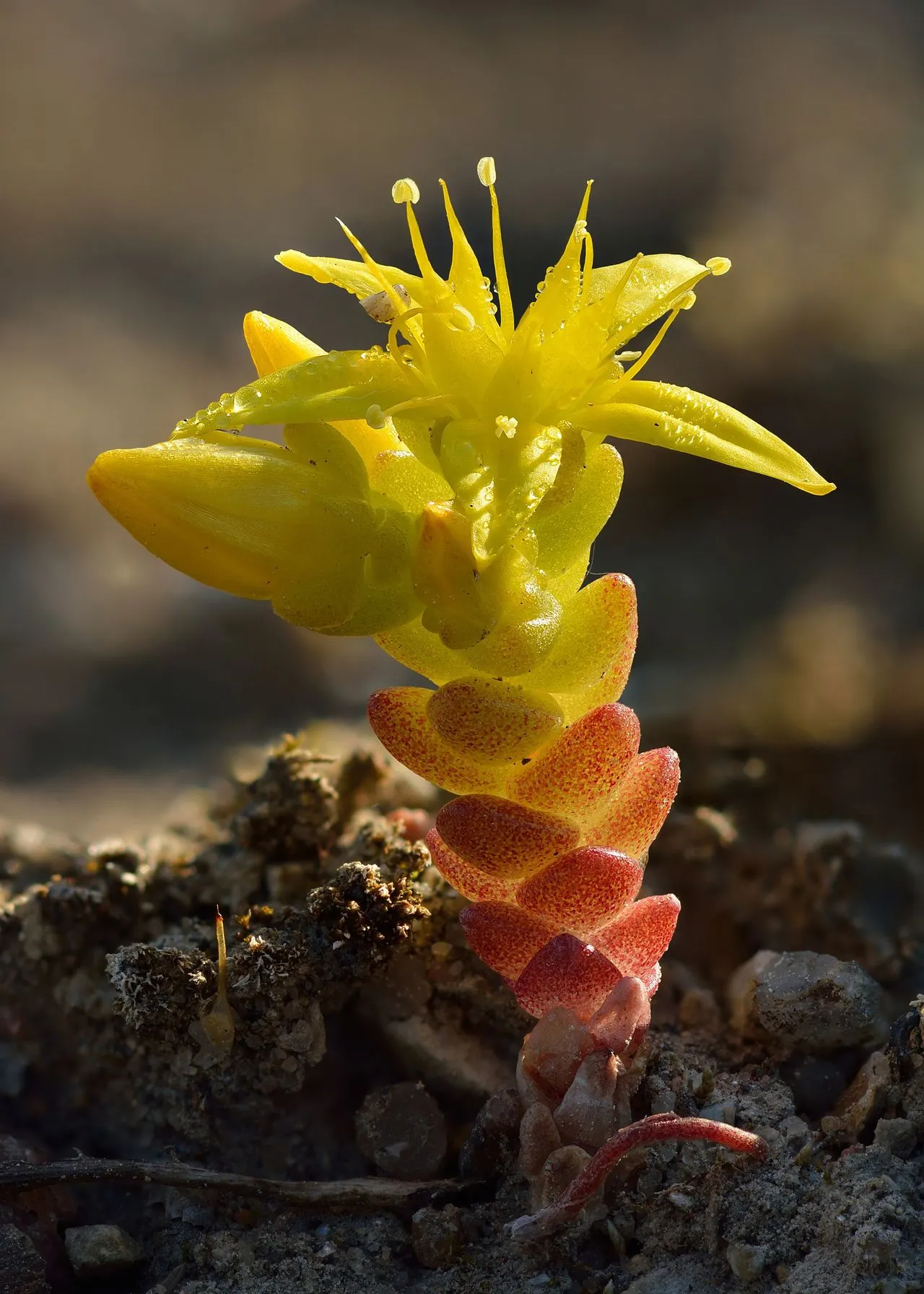
| What does the name Sedum mean? | It comes from Latin sedere, meaning to sit, referring to the habit of many species sitting flat on rocks and walls. |
| What is the plural of sedum? | In English the plural is sedums. |
Sedum is pronounced SEE-dum.
In IPA: /ˈsiː.dəm/.
Two syllables. Stress on the first. The e is long as in "seed"; the second syllable is a reduced schwa as in "atom" or "kingdom". Say "seed" and "um" together and you have it.
Part of the Complete Sedum Guide.
Where the name comes from
The name was adopted by Linnaeus in Species Plantarum (1753) from earlier Latin herbal use. It derives from the Latin verb sedere, "to sit", a direct reference to the habit of many species of sitting flat on rocks and walls. In classical Latin sedum itself referred to the houseleek (Sempervivum) as well as to what we would now call Sedum; medieval and early modern botanists used the name for both Crassulaceae genera interchangeably before Linnaeus fixed it.
The plural is sedums in English, not seda despite the Latin origin. Both Sedum and Sedums appear in print; the lower-case plural is standard when referring to the plants as a group rather than to the formal genus.
Common mispronunciations
The mistakes I hear most often:
- SED-um, with a short e as in "said". This is wrong; it is always a long ee.
- SEE-doom, with a long u. The second syllable is never stressed and the vowel is always reduced.
- SAY-dum, a reconstructed classical Latin pronunciation. Botanical Latin is not classical Latin; English-language horticulture uses anglicised Latin.
If you are working in a language other than English, the stress stays on the first syllable and the long e persists. Spanish-speaking gardeners typically say SÉ-dum with a shortened e; German horticultural usage is the same as English.
Related genus names
If you are working across Crassulaceae, these are the related pronunciations:
- Hylotelephium — hy-lo-tel-EF-ee-um.
- Phedimus — FED-ee-muss.
- Rhodiola — ro-dee-OH-la.
- Sempervivum — sem-per-VIV-um or sem-per-WEE-wum in strict botanical-Latin pronunciation.
- Crassula — KRAS-yoo-la.
Botanical Latin pronunciation is not formally standardised and regional variations are normal. The working rule is that stress falls on the penultimate syllable if it is long, otherwise on the antepenultimate.
See also
- The Complete Sedum Guide
- Sedum what a doozy
- Where to buy sedum
- Sedum acre — biting stonecrop, the type species, whose Latin name illustrates genus-level naming conventions.
Frequently Asked Questions
What is the correct pronunciation of sedum?
The standard English pronunciation is SEE-dum, with stress on the first syllable and a reduced second syllable.
What is the IPA for sedum?
The IPA given in the post is /ˈsiː.dəm/.
What does the name Sedum mean?
It comes from Latin sedere, meaning to sit, referring to the habit of many species sitting flat on rocks and walls.
What is the plural of sedum?
In English the plural is sedums. Seda is not used despite the Latin origin.